
Norse seafarers reached lands west of Greenland around 1,000 CE, centuries before Columbus’s Atlantic voyage. The strongest evidence is at L’Anse aux Meadows in northern Newfoundland, Canada, where archaeology confirms a short-lived Norse presence.
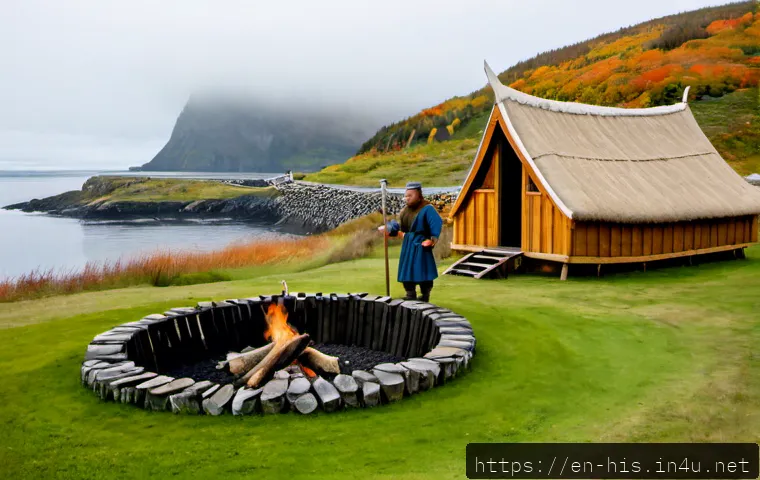
This does not mean the Norse arrived in an empty land: Indigenous peoples had lived across North America for thousands of years. For readers and travelers, the key is separating excavated evidence from saga interpretation and dramatic claims about “lost Viking colonies.” A heritage-site visit can offer the deepest context, while museums, books, and documentaries may be better choices when travel time or accessibility matters.
Use evidence quality, visitor access, and travel logistics—not sensational headlines—to choose a reliable Viking-history resource.
At a Glance
- Date: Norse seafarers reached lands west of Greenland around 1,000 CE; tree-ring research dates wood-cutting at L’Anse aux Meadows to 1021 CE.
- Place: L’Anse aux Meadows, at the northern tip of Newfoundland in Canada, is the only widely accepted Norse site in North America.
- Meaning: The evidence supports a short-lived Norse presence, not a lasting European colony or an “empty continent” discovery story.
| Option | Best Use | Planning Effort | Cost Considerations | What to Check |
|---|---|---|---|---|
| Confirmed heritage-site visit | Travelers seeking the strongest physical connection to the evidence | High; requires travel and seasonal planning | Transportation, lodging, admission, and possible guided-tour costs | Visitor access, opening conditions, interpretation quality, and travel logistics |
| Museum exhibit | Families, students, and readers who want objects and expert context | Low to moderate | Admission and local travel may apply | Whether the exhibit clearly separates archaeology from saga tradition |
| Book or documentary | Flexible learning before a trip or classroom discussion | Low | Purchase, borrowing, subscription, or rental may apply | Named archaeological evidence, careful sourcing, and limited speculation |
| Guided heritage visit | Visitors who value explanation and structured historical context | Moderate to high | Tour pricing and transport arrangements can vary | Guide credentials, itinerary focus, accessibility, and cancellation terms |
The Short Answer: Norse Sailors Reached North America Around 1,000 CE
The short answer is clear: Norse sailors traveling from Greenland reached lands west of Greenland around 1,000 CE. The best-supported physical evidence is at L’Anse aux Meadows in Newfoundland, Canada. The site matters because its archaeological remains provide a firmer foundation than stories alone.
What archaeology confirms
Archaeology at L’Anse aux Meadows includes turf-built structures and evidence of Norse-style ironworking. These remains support the conclusion that Norse people were present there. Tree-ring dating connected to a solar event has also helped establish that wood was cut at the site in 1021 CE.
That is a powerful historical result, but it has limits. Archaeology can show that people were at a place and can help date activity there. It cannot automatically answer every question about who traveled, how often they returned, how long each stay lasted, or what every visitor hoped to accomplish.
Why this does not mean Vikings “discovered” an empty continent
It is misleading to say Vikings “discovered” North America if that wording suggests no one lived there before them. Indigenous peoples had lived across North America for thousands of years before Norse visitors arrived. A more accurate description is that Norse seafarers from the North Atlantic reached part of the continent long before later European Atlantic voyages.
The difference between a visit, an outpost, and a permanent colony
These terms are not interchangeable. A visit can be brief or seasonal. An outpost suggests a place used for a practical purpose, such as shelter, repair, or local work. A permanent colony implies a sustained settlement with long-term continuity.
The evidence indicates that Norse presence in North America was short-lived and did not create a lasting European colony. That distinction keeps the history accurate and helps readers avoid exaggerating what L’Anse aux Meadows proves.
From Scandinavia to Greenland to Newfoundland: A Clear Voyage Timeline
The North American voyages did not begin as a direct jump from Scandinavia to Newfoundland. Norse settlements in Greenland formed an important stepping stone between Iceland and the North American mainland. Greenland connected the western North Atlantic world and made further exploration possible, even though those voyages remained difficult and uncertain.
The North Atlantic route and its practical limits
The broad route is easier to understand than the details of each journey: Norse communities extended across the North Atlantic, with Greenland serving as the western base before voyages continued toward lands farther west. But the exact number of voyages, their duration, and their seasonal patterns remain unknown.
This is an important caution for maps, timelines, and travel storytelling. A simple route line can be useful for orientation, but it should not be mistaken for a complete record of every expedition or landing.
Leif Erikson and the saga tradition
Leif Erikson is closely associated with Norse exploration of western lands in the Icelandic sagas. These narratives refer to places called Helluland, Markland, and Vinland. They are valuable historical sources, especially when read alongside archaeology, but they are not the same thing as excavated proof for every episode they describe.
Matching each saga name to a precise modern location remains debated. It is reasonable to discuss the names as part of the Norse story. It is not responsible to present one exact modern boundary for Vinland, Markland, or Helluland as certain when the evidence does not allow that level of precision.
What 1021 CE tells us about the chronology
The 1021 CE tree-ring date gives the discussion a rare point of precision. It helps anchor Norse activity at L’Anse aux Meadows to a specific year. Still, that date should not be stretched beyond what it shows. It dates wood-cutting connected to the site; it does not reveal the full length of Norse activity in North America or identify every voyage made from Greenland.
L’Anse aux Meadows: The Strongest Physical Evidence
L’Anse aux Meadows is central to any accurate account of Vikings in North America because it is the only widely accepted Norse site in North America. For travelers, students, and history readers, it is the best place to begin because the interpretation rests on physical remains rather than a dramatic theory.
Buildings, ironworking, and Norse material culture
The site includes turf-built structures and evidence of Norse-style ironworking. Together, these remains show more than a passing ship sighting. They demonstrate activity on land and connect the location to Norse material practices.
That said, visitors should resist the temptation to turn every surviving feature into a complete narrative. Archaeological sites are often strongest when they answer a focused question: in this case, whether Norse people reached and worked at this part of North America. They may be less decisive about motivations, social relationships, and the full travel network behind the site.
What visitors can learn from the site—and what the site cannot prove
A well-planned heritage visit can make the evidence easier to understand. You can focus on how turf structures, ironworking evidence, and landscape context support the larger historical conclusion. For many people, this is more memorable than reading a timeline alone.
However, the site cannot prove every saga detail, establish exact locations for all saga lands, or confirm broad claims about multiple permanent Norse colonies elsewhere on the continent. Before arranging a heritage trip, compare visitor access, interpretation quality, and travel logistics rather than assuming that every “Viking” attraction has the same evidentiary value.
Confirmed evidence versus claims about other locations
Claims of additional Norse settlements in North America need careful evaluation. A compelling map, an isolated object, or a bold museum label is not automatically enough to establish a settlement. Strong claims need strong archaeological support, clear context, and interpretations that can withstand scrutiny.
When a source calls a location a “lost Viking colony,” ask a basic question: does it identify evidence comparable in strength to the accepted case at L’Anse aux Meadows? If it does not, treat the claim as unconfirmed rather than established history.
Sagas, Archaeology, and Common Mistakes to Avoid
The most useful way to study Norse North America is to keep two types of evidence in view: saga-based interpretation and archaeological confirmation. They can inform one another, but they should not be blended into one certainty level.
How to read Vinland stories without treating every detail as fact

The sagas preserve names, journeys, and stories that help explain how later generations remembered western exploration. Read them as historical narratives with real value, not as modern travel logs with every location and event independently verified.
A careful resource will say when it is discussing a saga account, when it is describing excavated evidence, and when a conclusion remains debated. That clear labeling is often a better sign of quality than a dramatic claim of having solved every mystery.
Why maps and artifact claims need context
Maps can make uncertain ideas look settled. A clean border around Vinland may be visually useful, yet the exact geographic boundaries of Vinland, Markland, and Helluland cannot be stated with certainty. The same caution applies to alleged artifacts. An object needs a reliable archaeological context before it can carry a major historical claim.
A checklist for spotting unreliable Viking-history content
- Does the source distinguish confirmed archaeology from saga interpretation?
- Does it acknowledge that L’Anse aux Meadows is the only widely accepted Norse site in North America?
- Does it avoid presenting exact Vinland boundaries as settled fact?
- Does it explain where an alleged artifact was found and why its context matters?
- Does it avoid describing Norse arrival as the discovery of an uninhabited continent?
- Does it admit uncertainty about the number, duration, and purpose of western voyages?
Planning a Reliable Learning Experience: Museum, Book, Documentary, or Heritage Visit
The best resource depends on what you want to learn and how much planning you can manage. A book or documentary can provide a convenient introduction. A museum exhibit can add material context. A Newfoundland heritage trip can offer the most direct encounter with the accepted site, but it requires more time and logistical preparation.
Comparison table: depth, cost factors, accessibility, and time commitment
Use the comparison table above as a practical starting point. There is no universal “best” option. A student may need a carefully sourced book. A family may prefer a museum exhibit with accessible interpretation. A serious history traveler may find the most value in a visit that puts L’Anse aux Meadows within the wider Greenland-to-North America route.
Cost should be evaluated broadly rather than reduced to admission alone. For a heritage-site visit, consider transportation, lodging, available visitor services, and whether the timing fits your schedule. For a guided tour, review what is included and whether the guide’s interpretation emphasizes confirmed evidence.
When a Newfoundland heritage trip offers the most value
A trip is especially worthwhile when you want more than a quick fact check. It can be a strong choice for travelers who value place-based learning, educators building a wider North Atlantic history unit, and readers who want to see why the site’s structures and ironworking evidence matter.
It may be less practical if your main goal is simply to understand the basic timeline. In that case, a reputable book, documentary, or museum exhibit can be a more efficient first step. The right choice is the one that matches your travel budget, available time, accessibility needs, and interest in primary evidence.
Questions to ask before choosing a tour, exhibit, or educational resource
- Does it identify what is archaeologically confirmed?
- Does it explain uncertainty instead of making every saga detail sound proven?
- Is the visitor information current enough for practical planning?
- Does the experience focus on North American Norse history, or use “Viking” mainly as a marketing label?
- Does the format fit your needs for mobility, time, reading level, and travel planning?
Choosing the Best Way to Explore Norse North America
The best choice depends on whether you want a quick overview, a classroom-ready explanation, a family activity, or a history-focused trip. Start with the level of evidence you need, then decide how much time and planning you can realistically commit.
Best option for casual readers, students, families, and serious history travelers
Casual readers may do best with a concise, carefully sourced book or documentary that explains the route through Greenland and the role of L’Anse aux Meadows. Students benefit from resources that explicitly compare sagas with archaeology. Families may prefer a museum exhibit or guided setting where the main ideas are clearly interpreted. Serious history travelers may find a Newfoundland heritage visit most rewarding when they are prepared for the travel commitment.
Decision checklist: evidence quality, travel budget, accessibility, and season
Before booking, buying, or planning, check four things: the strength of the evidence presented, the full travel or access cost, the accessibility of the experience, and the seasonal realities of the destination. Also consider whether the resource explains Indigenous presence before Norse arrival. That detail is essential to an accurate account of North American history.
Key takeaways before booking or buying a resource
Choose resources that lead with L’Anse aux Meadows, explain the importance of 1021 CE without overstating it, and identify saga-based claims as interpretations where necessary. Avoid products or tours that promise certainty about “lost colonies,” exact Vinland borders, or every episode in the sagas.
Selection Criteria and Comparison Summary
Use these checkpoints before making a choice: evidence quality, clarity about uncertainty, visitor access, travel and time commitment, and accessibility needs. A confirmed-site visit offers the strongest place-based experience, while museums and educational resources can be more practical for many readers. Compare visitor access, interpretation quality, and travel logistics before booking. For official visitor guidance and detailed conditions, check the relevant site or provider page directly.
In Closing
Norse sailors reached North America around 1,000 CE, and L’Anse aux Meadows provides the strongest physical evidence of that achievement. The 1021 CE tree-ring date gives the story an unusually precise chronological anchor. Just as important, the history should be told without erasing the Indigenous peoples who had lived across the continent for thousands of years. The most reliable approach is simple: value archaeology, read sagas carefully, and stay cautious around claims that go beyond the evidence.
Useful Things to Know
1. Greenland was the key stepping stone between Iceland and North America.
2. Helluland, Markland, and Vinland are saga names, but their exact modern boundaries remain debated.
3. L’Anse aux Meadows is the only widely accepted Norse site in North America.
4. A precise date for wood-cutting does not answer every question about the length or pattern of Norse voyages.
5. The best history resources explain both what is known and what still needs verification.
Important Notes
The archaeological record confirms Norse activity at L’Anse aux Meadows, but it does not establish the full number of western voyages, their exact duration, or the precise locations of all saga lands. Specific motivations, trade contacts, and conflicts described in later narratives cannot always be independently verified. Treat claims of additional settlements, spectacular artifacts, or exact Vinland maps as requiring careful evidence and context.
Frequently Asked Questions
Q1. Did Vikings reach North America before Columbus?
A1. Yes. Norse seafarers from Greenland reached lands west of Greenland around 1,000 CE. Archaeological evidence at L’Anse aux Meadows in Newfoundland confirms a Norse presence, and wood-cutting at the site has been dated to 1021 CE.
Q2. Is L’Anse aux Meadows worth visiting for travelers interested in Viking history?
A2. It can be a strong choice for travelers who want to engage directly with the most widely accepted Norse archaeological site in North America. It is especially worthwhile if you value archaeological interpretation and can accommodate the travel, seasonal planning, and accessibility considerations involved.
Q3. Are there confirmed Viking sites in the United States?
A3. L’Anse aux Meadows in Newfoundland, Canada, is the only widely accepted Norse site in North America. Claims for additional Norse settlements, including locations in the United States, should be evaluated carefully and should not be treated as established without strong archaeological support.