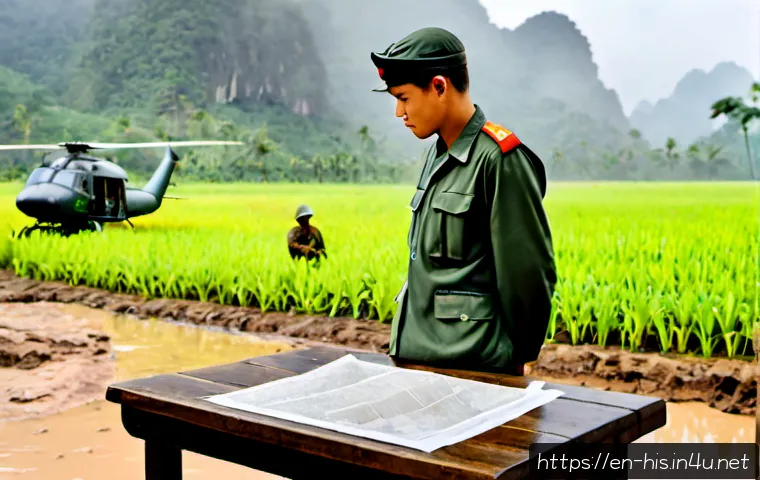
The Vietnam War was closely tied to the Cold War because the United States, Soviet Union, and China supported opposing sides in a struggle shaped by containment, communism, and regional power.
Learn the key connections, limits, and lasting effects.
The Vietnam War became a major Cold War conflict because the United States supported South Vietnam under its policy of containing communism, while North Vietnam received major aid from the Soviet Union and China.
Yet it was not simply a war directed by outside powers: Vietnamese reunification, nationalism, colonial history, and internal political conflict were central to its course.
For students and general readers, the clearest approach is to study both the international Cold War framework and the local Vietnamese context. A well-chosen history book, documentary, map collection, or online course should show where outside support mattered—and where it did not explain every decision.
The sections below offer a practical comparison of the major participants and a guide for evaluating history learning resources without reducing a complex war to one simple label.
At a Glance
- The United States saw Vietnam through Cold War containment and expanded its support for South Vietnam substantially during the 1960s.
- North Vietnam received important military and economic support from the Soviet Union and the People’s Republic of China.
- The war had a Cold War dimension, but Vietnamese political goals, colonial history, nationalism, and civil conflict were also central.
| Participant | Main Goal | Role or Support | Key Constraint |
|---|---|---|---|
| United States | Contain communist expansion and support South Vietnam | Expanded military involvement substantially during the 1960s | Could support an ally without fully controlling the conflict |
| North Vietnam | Reunification and revolutionary struggle | Received important Soviet and Chinese military and economic aid | Its goals cannot be reduced to outside direction |
| Soviet Union and China | Support North Vietnam while pursuing their own regional priorities | Provided important aid | They had competing priorities and did not make every Vietnamese decision |
| South Vietnam | Survival, legitimacy, and political stability | Received major US support | Relied heavily on foreign assistance while facing internal pressures |
The Short Answer: Why Vietnam Became a Major Cold War Battleground
Vietnam became a Cold War battleground because international rivalry overlapped with a divided country and an unresolved political struggle. The United States interpreted the conflict as part of a broader contest over communism in Southeast Asia. North Vietnam, meanwhile, could draw on significant assistance from the Soviet Union and China. The important caution is that Cold War involvement explains part of the war, not all of it.
Containment and the US Fear of Communist Expansion
Containment was the US policy framework for limiting the spread of communism. American leaders viewed support for South Vietnam as connected to wider US foreign-policy credibility and alliance commitments. This perspective helped turn a regional conflict into a major focus of US strategy. The Gulf of Tonkin Resolution in 1964 gave President Lyndon B. Johnson broad authority to escalate US military involvement.
Soviet and Chinese Support for North Vietnam
North Vietnam received important military and economic support from both the Soviet Union and the People’s Republic of China. This support made the conflict part of Cold War diplomacy and competition, but it should not be treated as proof that either country fully controlled North Vietnamese policy. A reliable history resource should separate aid, influence, and command, since those are not the same thing.
Why Vietnamese Goals Cannot Be Reduced to Superpower Rivalry
Vietnamese political objectives were shaped by reunification, revolutionary struggle, colonial history, and conflict between North and South. Calling the war only a “proxy war” can hide those local forces. The degree to which any outside Cold War power controlled decisions by Vietnamese leaders remains a question that requires careful source comparison.
From French Colonial Rule to a Divided Vietnam
The Cold War context became especially important after Vietnam was divided, but the conflict also grew from the end of French colonial rule. Understanding this earlier setting prevents the history from beginning only with US intervention.
The End of French Indochina and the 1954 Geneva Accords
After the 1954 Geneva Accords, Vietnam was temporarily divided at the 17th parallel, creating North Vietnam and South Vietnam. The division created a political and territorial framework that later drew in outside powers. For a basic overview, a clear timeline and historical map can be more useful than a long narrative alone.
Political Divisions Between North and South
The two Vietnamese states developed under different political conditions and with different external relationships. North Vietnam received important support from communist powers, while South Vietnam became increasingly dependent on the United States. These alignments mattered, but they existed alongside domestic political challenges and competing Vietnamese visions of legitimacy.
Why Reunification Elections Became a Source of Conflict
Questions about reunification and political authority became a major source of conflict. This is one reason the war cannot be understood only as a contest between Washington, Moscow, and Beijing. When using a documentary or online history course, check whether it explains the political disputes inside Vietnam rather than treating Vietnamese actors as background characters.
Comparing the Goals of the Major Participants
The participants shared no single agenda. Their objectives overlapped at times, but each side had its own political priorities and constraints.
United States: Containment, Credibility, and Alliance Commitments
The United States aimed to contain communism and support South Vietnam. American decision-making also involved concerns about credibility and commitments to partners. A strong academic history should distinguish between stated policy goals and the changing consequences of military escalation.
North Vietnam: Reunification and Revolutionary Struggle
North Vietnam’s goals included reunification and revolutionary struggle. Soviet and Chinese assistance was important, but North Vietnamese objectives emerged from Vietnamese political history as well as Cold War conditions. This distinction is essential when comparing different historical interpretations.
Soviet Union and China: Influence, Aid, and Competing Priorities
The Soviet Union and China both supported North Vietnam, even though they were rivals. Their shared support does not mean their priorities were identical. Readers should be cautious with accounts that assume a unified communist strategy without examining the separate interests of each government.
South Vietnam: Survival, Legitimacy, and Dependence on Foreign Support
South Vietnam sought survival and legitimacy while relying heavily on US support. Its leaders and population were not simply passive recipients of American policy. A balanced resource should examine South Vietnamese political goals and constraints rather than discussing the country only through US decisions.
How Cold War Strategy Shaped the Fighting
Cold War strategy shaped how the war was supported, discussed, and escalated. It did not erase the local causes of conflict or give outside powers complete control over events.
Military Aid, Advisers, and Escalation
Military and economic aid connected Vietnam to wider Cold War competition. US involvement expanded substantially during the 1960s, while North Vietnam continued to receive important support from the Soviet Union and China. The 1964 Gulf of Tonkin Resolution was a major turning point because it gave Johnson broad authority to escalate US military involvement.

The Domino Theory and Its Influence on US Decision-Making
The domino theory reflected the fear that communist gains in one place could affect nearby countries. It helped shape how US policymakers interpreted Vietnam’s strategic importance. When studying this topic, separate the theory’s influence on decision-making from claims about what would necessarily have happened.
Proxy-War Limits: Why Outside Powers Did Not Fully Control the Conflict
Vietnam is often described as a proxy war because major outside powers backed opposing sides. That label is useful only when paired with its limits. The evidence does not support assuming that any one Cold War power controlled every North or South Vietnamese decision, and the war’s exact course without Cold War intervention cannot be known with certainty.
Common Misunderstandings and Source-Checking Tips
The best learning materials make complexity easier to follow without removing it. A short overview may be enough for an introduction, but deeper study benefits from comparing perspectives and source types.
Avoiding the “Only a Proxy War” Oversimplification
A proxy-war framework explains the role of US, Soviet, and Chinese involvement. It becomes misleading when it dismisses Vietnamese nationalism, colonial history, reunification goals, and civil conflict. Look for resources that give meaningful attention to both international and Vietnamese actors.
Distinguishing Political Rhetoric from Historical Evidence
Political speeches and official statements can reveal what leaders said and believed, but they are not automatically complete explanations. A credible history book or archival collection should identify its sources, acknowledge uncertainty, and distinguish evidence from interpretation.
What to Check When Comparing Documentaries, Books, Maps, and Online Courses
Check whether the resource identifies authors, historians, archives, or primary materials. For maps, confirm the date and what the map is designed to show. For documentaries, notice whether interviews and images are placed in historical context. For a paid online course or reference collection, review the syllabus, instructor background, source list, and whether the material includes Vietnamese perspectives.
Choosing History Resources and Comparing Perspectives
Choose an introductory overview when you need a timeline, basic map, and explanation of the 1954 division, US escalation, the 1973 Paris Peace Accords, and the fall of Saigon in 1975. Choose an academic history when you need competing interpretations, deeper analysis of Vietnamese politics, or detailed discussion of Cold War diplomacy. Use archival collections and specialist courses when your question depends on primary documents or a narrow topic.
When to Use an Introductory Overview Versus an Academic History
An introductory book or documentary is suitable for first-time learners who need the major sequence of events. Academic histories are better for research papers, teaching preparation, or readers comparing the role of the United States, Soviet Union, China, North Vietnam, and South Vietnam. Neither format is automatically neutral; scope and sourcing still matter.
Criteria for Evaluating Paid Courses, Documentaries, and Reference Collections
Before choosing a history course, documentary subscription, map collection, or reference database, look for clear authorship, stated sources, the date of publication or update, and coverage of multiple perspectives. A resource is more useful when its format fits your goal: visual maps for geography, documentary material for guided viewing, and scholarly books for sustained argument. Check the official course or product page for full contents and access conditions.
A Balanced Checklist for Building a Reliable Reading or Viewing List
Include at least one broad overview, one resource focused on Vietnamese history, and one source that addresses Cold War diplomacy. Compare how each explains foreign aid, escalation, and reunification. If two sources disagree, identify whether they rely on different evidence, different questions, or different definitions of a “proxy war.”
Selection Criteria and Comparison Summary
Before selecting a book, documentary, map set, or online course, check these points:
- Scope: Does it cover both the Cold War and Vietnamese political history?
- Sources: Does it identify documents, archives, scholars, or other evidence?
- Perspective: Does it include more than one national viewpoint?
- Format: Do you need a timeline, maps, primary documents, or detailed analysis?
- Level: Is it designed for a first overview, classroom use, or advanced research?
For a purchase or enrollment decision, review the table of contents, syllabus, sample material, and source list on the relevant page before choosing.
Closing Thoughts
The Vietnam War was deeply connected to the Cold War, but it was never just a simple contest between superpowers. US containment policy, Soviet and Chinese aid, and the division of Vietnam all shaped the conflict. At the same time, Vietnamese nationalism, colonial history, and internal political struggles remained central. The most reliable understanding comes from holding both levels of history together.
Useful Things to Know
- The Paris Peace Accords were signed in 1973.
- The war ended with the fall of Saigon in 1975.
- The conflict influenced Cold War diplomacy, public opinion, military strategy, and later US foreign-policy decisions.
- Exact casualty totals, economic costs, and the relative effect of outside support can vary by source and methodology.
Important Notes
Historical interpretations of the Vietnam War differ, especially when assessing the influence of outside powers. The precise degree of control exercised by the United States, Soviet Union, China, or Vietnamese leaders should not be assumed without checking the evidence. Claims about what the war would have looked like without Cold War intervention remain uncertain and should be presented as interpretation, not settled fact.
Frequently Asked Questions
Q1. Was the Vietnam War mainly a proxy war between the United States and the Soviet Union?
A1. It had important proxy-war features because the United States supported South Vietnam while the Soviet Union and China supported North Vietnam. However, describing it only as a proxy war is incomplete because Vietnamese reunification, nationalism, colonial history, and internal political conflict were also central.
Q2. Why did China support North Vietnam if China and the Soviet Union were rivals?
A2. China and the Soviet Union were rivals, but both provided important support to North Vietnam. Their support should not be treated as evidence that they had identical goals or that either power fully directed North Vietnamese decisions.
Q3. What should students look for when choosing a reliable Vietnam War book or documentary?
A3. Look for clear sourcing, identified authors or historians, coverage of Vietnamese as well as international perspectives, and a scope that fits your purpose. A useful resource should explain Cold War strategy while also addressing the political history of North and South Vietnam.