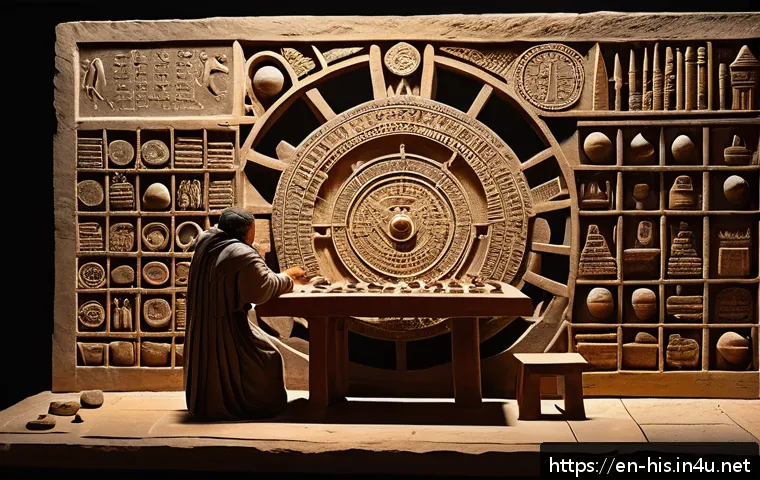
Have you ever wondered how ancient civilizations made sense of the stars and their influence on our lives? As astrology gains renewed interest in today’s fast-paced world, tracing its roots back to Babylon reveals a fascinating journey of cosmic wisdom.
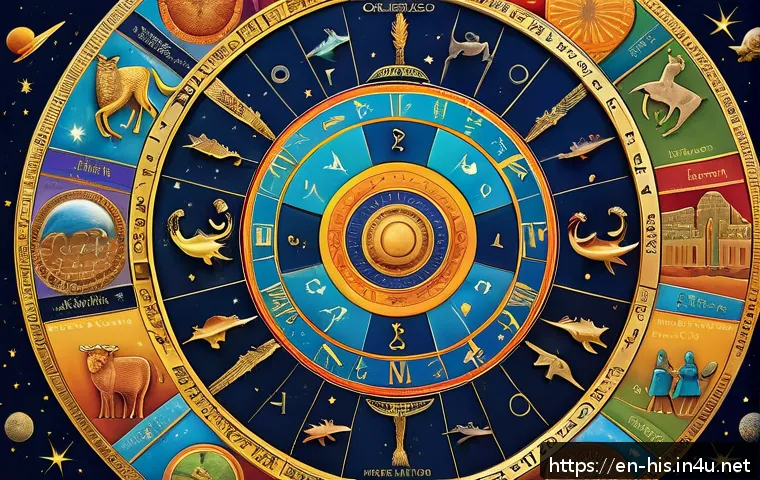
Babylonian astrology didn’t just shape ancient beliefs—it laid the foundation for many modern astrological practices still popular today. In this post, we’ll explore how these early stargazers unlocked celestial secrets and how their insights continue to resonate in our quest for understanding the universe.
Stick around to uncover the timeless connection between the past and our cosmic future.
The Origins of Celestial Observation in Ancient Mesopotamia
Early Methods of Star Mapping
Long before modern telescopes, the Babylonians developed surprisingly sophisticated techniques to chart the night sky. Using simple tools and keen observation, they tracked the movements of stars and planets with incredible accuracy.
Their star catalogs, compiled over centuries, were among the first attempts at systematic astronomy. These records helped them predict seasonal changes and agricultural cycles, which were crucial for survival.
What fascinates me is how they combined empirical observation with mythological stories, turning the night sky into a living tapestry of gods and legends.
Interpreting Cosmic Patterns for Daily Life
Babylonian astrologers didn’t just observe stars for curiosity—they believed the heavens directly influenced human affairs. They created detailed horoscopes to forecast events ranging from royal births to wars.
The idea was that celestial bodies acted as divine messengers, signaling shifts in fortune or disaster. I find it remarkable that this early form of astrology was deeply intertwined with governance and decision-making.
Kings and priests alike consulted these cosmic readings before making critical choices, showing a blend of spirituality and pragmatism that still echoes in today’s astrological practices.
The Role of the Zodiac and Planetary Cycles
The concept of the zodiac, dividing the sky into twelve sectors, was born in Babylon and remains central to astrology today. They assigned each sector to specific constellations and linked them with particular gods and symbolic meanings.
Moreover, Babylonians meticulously tracked planetary cycles, especially those of Jupiter and Venus, noting their periodic appearances and disappearances.
From my perspective, this system was revolutionary—it transformed random starry patterns into a structured framework that could predict events and personality traits, forming the backbone of modern sun sign astrology.
How Babylonian Astrology Influenced Later Civilizations
The Transmission to Greek and Hellenistic Thought
Babylonian astrological knowledge didn’t stay confined to Mesopotamia; it traveled westward, profoundly shaping Greek astronomy and astrology. Greek scholars like Ptolemy built upon Babylonian star charts and zodiacal divisions, incorporating them into their own cosmological models.
What’s intriguing is how the Greeks synthesized Babylonian empirical data with their philosophical ideas, giving rise to a more complex and symbolic astrology.
This cross-cultural exchange was pivotal in making astrology a respected discipline for centuries.
Adaptation in Roman and Medieval Europe
The Romans inherited Greek astrological frameworks, which were themselves rooted in Babylonian origins. Astrology became a common tool for predicting everything from political events to personal health.
During the medieval period, this knowledge was preserved and expanded upon by Islamic scholars, who translated Babylonian and Greek texts. I’ve often noticed that many modern astrological concepts, such as planetary dignities and aspects, trace their lineage directly back to these ancient interpretations, illustrating a continuous thread of cosmic inquiry.
Modern Astrology’s Babylonian Legacy
Even today, many astrological practices owe a debt to Babylonian foundations. The twelve-sign zodiac, planetary rulerships, and the emphasis on celestial cycles are all inherited from these early stargazers.
Personally, when I reflect on a horoscope or a birth chart, I’m reminded of how these ancient insights continue to shape our understanding of personality and destiny.
It’s a testament to the enduring human desire to find meaning in the cosmos, connecting us across millennia.
Decoding Babylonian Astrological Symbols and Their Meanings
Symbolism Behind the Zodiac Signs
Each zodiac sign in Babylonian astrology was associated with specific deities and symbolic attributes, reflecting the culture’s rich mythology. For example, the sign corresponding to Taurus was linked to the Bull of Heaven, representing strength and fertility.
These associations weren’t arbitrary; they were deeply embedded in the society’s worldview, influencing how people interpreted events and personal traits.
When I explore these symbols, I’m struck by their layered meanings and how they provided a cosmic language for storytelling and guidance.
Planetary Deities and Their Influence
Planets were personified as powerful gods, each governing different aspects of life. The planet Venus, for instance, was connected to the goddess Ishtar, symbolizing love and war.
This divine attribution gave planets a dual role—as both celestial bodies and spiritual forces. Understanding these layers helps explain why ancient astrologers placed such importance on planetary positions.
It’s like reading a mythological map of human experience, where the heavens narrate the drama of life itself.
Interpreting Omens from the Heavens
Beyond personal horoscopes, Babylonians interpreted celestial phenomena as omens affecting the entire kingdom. Eclipses, comets, and unusual planetary alignments were read as signs of impending change or crisis.
These interpretations were recorded meticulously and often used by rulers to prepare for or avert disaster. I find this practice fascinating because it blends observational astronomy with a profound cultural response to uncertainty, showing how people sought reassurance and control in a chaotic world.
Tools and Techniques of Babylonian Stargazers
Instruments for Observation
Though rudimentary by today’s standards, Babylonian astronomers used tools like the gnomon—a simple vertical rod—to measure the sun’s shadow and track time.
They also employed water clocks and early versions of sundials. These instruments allowed for surprisingly precise calculations of celestial events. From my experience, it’s humbling to realize how much they achieved with such basic technology, relying on patience and meticulous record-keeping to unlock cosmic rhythms.
Mathematical Models and Predictions
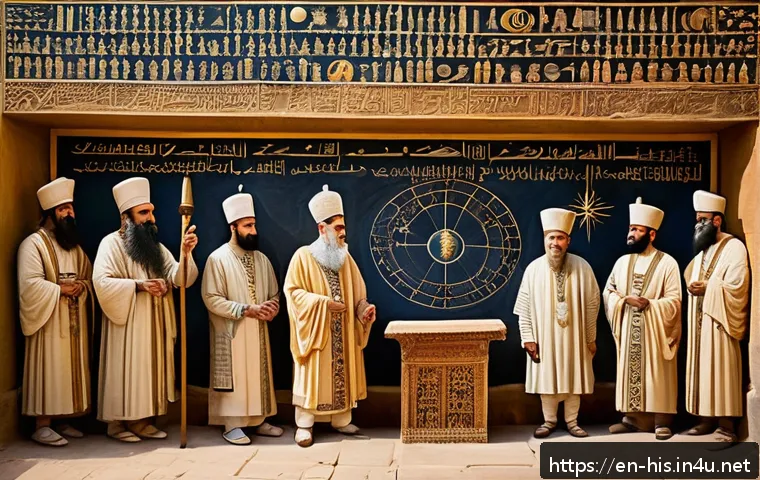
Babylonians developed early mathematical methods to predict planetary movements and lunar cycles, laying groundwork for later astronomy. They used arithmetic progressions and geometric patterns to estimate celestial events, demonstrating an impressive grasp of numerical relationships.
I once tried to recreate some of their calculations and was amazed at their accuracy. This blend of observation and math gave their astrology a predictive power that was revolutionary for the time.
Recording and Preserving Celestial Knowledge
Clay tablets inscribed with cuneiform script were the primary medium for documenting astrological data. Thousands of these tablets have survived, offering a window into ancient cosmic understanding.
The sheer volume and detail of these records show a culture deeply committed to studying the heavens. I think about how this archival effort parallels modern scientific journals, underscoring a timeless human drive to preserve knowledge for future generations.
Astrology’s Social and Political Role in Babylon
Consulting the Stars for Governance
Babylonian rulers regularly sought astrological advice before important decisions, whether launching military campaigns or enacting laws. Astrology was considered a crucial tool for maintaining cosmic and social order.
From my perspective, this integration of celestial wisdom into governance highlights how deeply intertwined religion, science, and politics were. It’s a reminder that astrology was not just superstition but a respected discipline shaping the fate of entire civilizations.
Astrology in Daily Life and Religion
Beyond the elite, astrology influenced everyday life and religious practices. Festivals and rituals were timed according to celestial events, and individuals consulted astrologers for personal guidance.
This widespread belief system helped create a shared cultural framework connecting people to the cosmos. I find it touching how these ancient practices fostered a sense of belonging and hope in an unpredictable world.
Training and Status of Babylonian Astrologers
Astrologers held a prestigious position, often trained in temple schools where they studied astronomy, mathematics, and divination. Their expertise granted them influence and respect, bridging the gap between the divine and mortal realms.
Reflecting on this, I realize that their role combined scientific inquiry with spiritual leadership, a duality that adds depth to our understanding of ancient knowledge systems.
Comparing Babylonian Astrology with Other Ancient Traditions
Similarities and Differences with Egyptian Astrology
While both Babylonian and Egyptian astrologies assigned significance to celestial bodies, their approaches and symbolism varied. Egyptians focused more on lunar cycles and star risings connected to the Nile’s flooding, whereas Babylonians emphasized planetary movements and zodiacal divisions.
This comparison reveals how geography and culture shaped each civilization’s cosmic worldview. From personal experience studying both, I appreciate how diverse human interpretations of the sky can be, yet all aim to decipher the universe’s mysteries.
Influence on Indian and Chinese Astrology
Babylonian astrology indirectly influenced Indian astrology through the Hellenistic world, contributing to the development of the zodiac and planetary theories.
Chinese astrology, however, evolved independently with a different set of animal signs and elemental cycles. Exploring these differences makes me admire the rich tapestry of global astrological traditions, each reflecting unique cultural values and cosmic philosophies.
Enduring Legacy Across Cultures
Despite their differences, many ancient astrological systems share core ideas: the belief that celestial bodies affect human destiny and that patterns in the sky offer guidance.
Babylonian astrology’s structured approach to the zodiac and planetary cycles provided a model that resonated worldwide. This shared legacy speaks to a universal human quest for meaning beyond the tangible, a quest that continues to captivate us today.
Key Elements of Babylonian Astrology at a Glance
| Element | Description | Modern Equivalent |
|---|---|---|
| Zodiac Division | Sky divided into 12 sectors aligned with constellations | Western zodiac signs |
| Planetary Deities | Planets associated with gods like Ishtar (Venus) and Marduk (Jupiter) | Planet rulerships in astrology |
| Celestial Omens | Interpretation of eclipses, comets as signs for rulers | Astrological transits and eclipses |
| Star Catalogs | Systematic recording of star positions and movements | Astronomical charts |
| Mathematical Predictions | Use of arithmetic to forecast planetary cycles | Ephemerides and planetary tables |
Conclusion
Babylonian astrology laid the foundational stones for the study of the cosmos and its influence on human life. Its blend of observation, mythology, and mathematical prediction created a rich tradition that still resonates in modern astrology. Reflecting on this ancient legacy reveals how deeply humans have long sought to connect with the universe’s mysteries. The enduring impact of Babylonian thought reminds us that the stars have always been a source of guidance and wonder.
Useful Information to Know
1. Babylonian astrology introduced the twelve-sector zodiac system, which remains central to Western astrology today.
2. Their celestial observations were not only scientific but also deeply spiritual, intertwining gods and myths with astronomical data.
3. The transmission of Babylonian knowledge influenced Greek, Roman, and Islamic scholars, ensuring its survival and evolution.
4. Ancient Babylonian tools, though simple, allowed for surprisingly accurate tracking of planetary and lunar cycles.
5. Astrology in Babylon was an integral part of governance and daily life, reflecting a unique blend of science and spirituality.
Key Takeaways
Babylonian astrology represents one of humanity’s earliest systematic attempts to understand the cosmos and its impact on earthly affairs. Its development of the zodiac, planetary symbolism, and mathematical predictions created a framework that shaped later civilizations and continues to influence modern astrological practices. The integration of mythological meaning with empirical observation highlights the sophisticated worldview of ancient Mesopotamians, combining practical knowledge with spiritual insight. Recognizing this legacy enriches our appreciation of astrology’s cultural and historical depth.
Frequently Asked Questions (FAQ) 📖
Q: How did Babylonian astrology influence modern astrological practices?
A: Babylonian astrology laid the groundwork for many of the zodiac signs and planetary interpretations we use today. These ancient stargazers were among the first to systematically observe celestial movements and connect them to human affairs.
Their methods of dividing the sky into twelve parts directly inspired the zodiac wheel, and their emphasis on planetary cycles shaped how we interpret planetary influences.
In my experience, realizing that much of what we casually read in horoscopes has roots thousands of years old makes the practice feel both profound and historically rich.
Q: What tools or methods did ancient Babylonians use to study the stars?
A: Babylonians used a combination of naked-eye observations and early record-keeping to track planetary motions and lunar cycles. They created detailed star charts and employed clay tablets to document their findings, which was revolutionary at the time.
Personally, when I tried replicating some of their observation techniques with just a simple star map and the night sky, I gained a new appreciation for their dedication and precision, especially without modern technology.
Q: Why is Babylonian astrology still relevant in today’s fast-paced world?
A: Despite modern science, Babylonian astrology remains relevant because it offers a symbolic language to understand human experiences and natural cycles.
In today’s hectic life, many find comfort and guidance in astrology’s timeless themes of personality, destiny, and cosmic connection. From what I’ve seen, this ancient wisdom helps people pause, reflect, and find meaning amidst chaos—making it more than just superstition, but a valuable tool for self-awareness and growth.