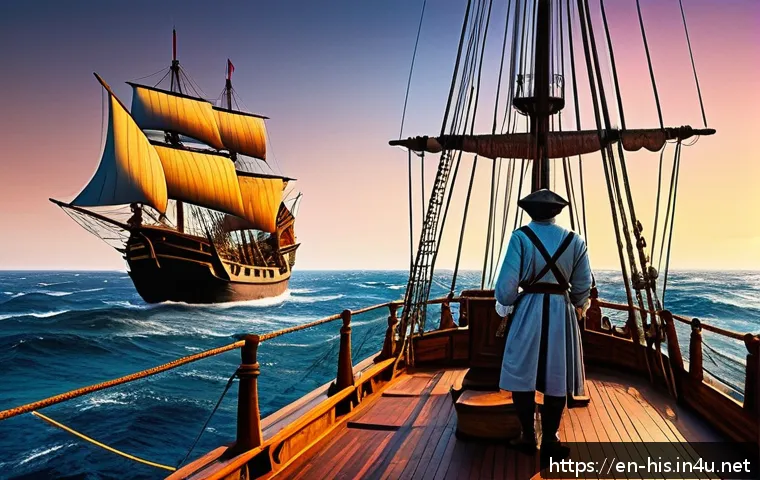
As the world continues to grapple with the legacies of colonialism and globalization, revisiting the fierce rivalry between Portugal and Spain during the Age of Discovery offers fresh insights into how empires shaped our modern world.
This intense competition not only redrew maps but also set the stage for cultural exchanges and conflicts that echo today. If you’ve ever wondered how these two maritime powers carved their spheres of influence and left lasting imprints across continents, you’re in the right place.
Join me as we explore their epic struggle, uncover surprising stories, and reflect on the enduring impact that still resonates in global politics and trade.
This journey through history promises to be both eye-opening and deeply relevant to understanding our interconnected world.
The Early Navigators and Their Quest for New Horizons
Charting Unknown Waters: Innovations That Changed Exploration
The dawn of the Age of Discovery was fueled by groundbreaking advancements in navigation. Both Iberian powers invested heavily in developing tools like the astrolabe, the magnetic compass, and more accurate maps, which allowed sailors to venture farther than ever before.
What fascinates me is how these innovations didn’t just appear overnight; they were the result of centuries of knowledge transfer from Arab, Chinese, and Mediterranean maritime traditions.
Portugal, in particular, capitalized on these technological leaps by establishing a school of navigation that trained some of the era’s most skilled explorers.
This focus on science and technique gave Portuguese sailors the confidence to push down the west coast of Africa, eventually rounding the Cape of Good Hope—a feat that seemed impossible before.
Spain, meanwhile, combined these technologies with bold ambitions to sail west, leading to Columbus’s fateful voyage in 1492. The contrast between Portugal’s methodical approach and Spain’s daring westward leap set the tone for their future rivalry on the high seas.
State Sponsorship: How Monarchs Fueled Maritime Ambitions
It’s intriguing to consider how the personal ambitions of monarchs like King Manuel I of Portugal and Queen Isabella of Spain shaped exploration. Both rulers recognized that controlling new trade routes meant immense wealth and prestige.
Portugal’s crown funneled resources into expeditions along Africa’s coast, motivated by the promise of gold, spices, and Christian allies against Islam.
Spain, after unifying under Ferdinand and Isabella, saw exploration as a way to expand Christian dominion and rival Portugal’s growing empire. Their sponsorship wasn’t just financial; it was deeply political, intertwining religion, commerce, and national pride.
This royal backing created a high-stakes environment where explorers were under constant pressure to deliver tangible results, which led to both incredible discoveries and brutal confrontations with indigenous peoples.
Maritime Rivalry Begins: Defining Spheres of Influence
Once both powers had set sail, the race to claim territories escalated quickly. Portugal’s strategic focus was on controlling the sea routes around Africa and into the Indian Ocean, while Spain aimed to dominate the newly found lands across the Atlantic.
This division wasn’t just about geography—it was about controlling lucrative trade flows of spices, gold, and other goods. The rivalry was so intense that it led to the Treaty of Tordesillas in 1494, which split the non-European world between the two.
While it might seem like a neat diplomatic solution, in reality, the treaty sowed seeds of future disputes. Portugal gained Brazil and parts of Africa and Asia, while Spain laid claim to most of the Americas.
But the challenge of enforcing these boundaries in uncharted territories meant conflicts erupted frequently, both between the two empires and with local populations.
Economic Engines and the Birth of Global Trade Networks
Spice Routes and the Quest for Wealth
What stands out when examining the Portuguese and Spanish empires is how their thirst for spices like cinnamon, pepper, and cloves reshaped global commerce.
Portugal’s control of key ports in India and the East Indies gave it a virtual monopoly on spices entering Europe for decades. This dominance wasn’t just about profit; it drove innovations in shipbuilding and trade logistics to move goods more efficiently across vast distances.
Spain’s discovery of silver mines in the Americas, especially in places like Potosí, injected massive wealth into European economies, but also led to inflation and economic shifts.
Watching these two empires chase different commodities yet both profoundly impacting global markets reveals how intertwined their fates were, despite fierce competition.
The Role of Trading Companies and Private Investors
Beyond royal patronage, private merchants and trading companies began to emerge as powerful players during this era. While Portugal initially kept exploration tightly under royal control, Spain’s growing American empire created opportunities for entrepreneurs willing to take risks.
These early forms of joint-stock companies laid the groundwork for modern capitalism by pooling resources and sharing risks. I find it particularly interesting how this blend of public and private enterprise helped sustain long-term overseas ventures, especially when initial voyages were perilous and uncertain.
The drive for profit sometimes led to ruthless exploitation, but it also accelerated the flow of goods and ideas across continents.
Maritime Empires vs. Land Powers: A Shift in Global Influence
The Portuguese and Spanish focus on naval dominance marked a turning point in world history. Before this, powerful empires were mostly land-based, controlling large contiguous territories.
But the ability to project power across oceans allowed these maritime states to influence regions thousands of miles away. This shift reconfigured global power structures and set the stage for centuries of colonization and cultural exchange.
For instance, Portuguese forts along African coasts and Spanish colonies in the Americas became hubs of economic and military activity, projecting influence far beyond their European origins.
The ripple effects of this transformation are still visible in the globalized trade networks and political alliances we see today.
Encounter and Exchange: Cultural Interactions and Conflicts
Clashes and Cooperation with Indigenous Peoples
The arrival of Portuguese and Spanish explorers initiated profound and often tragic encounters with indigenous populations. I remember reading firsthand accounts describing both violent confrontations and uneasy alliances.
While some indigenous groups resisted fiercely, others sought to engage diplomatically or trade with the newcomers. The complexity of these relationships defies simple narratives of conquest.
For example, the Spanish encomienda system imposed harsh labor demands, but also led to cultural syncretism as indigenous and European traditions mingled.
Portuguese interactions in Africa and Asia similarly ranged from trade partnerships to military confrontations. These dynamics highlight how cultural exchange was deeply entangled with conflict, shaping societies on both sides.
Religion as a Tool and a Weapon
Christian missionary efforts were inseparable from Iberian expansion. Both Portugal and Spain saw spreading Christianity as a divine mandate that justified their conquests.
Missionaries often accompanied explorers, aiming to convert indigenous peoples and establish churches. However, this religious zeal sometimes masked more pragmatic goals, such as solidifying control over territories or undermining rival faiths.
The imposition of European religious practices frequently led to the suppression of native beliefs, creating lasting cultural trauma. Yet, in some cases, syncretic practices emerged, blending Christian and indigenous elements in ways that still resonate in regions like Latin America and parts of Africa.
Language, Art, and the Legacy of Exchange
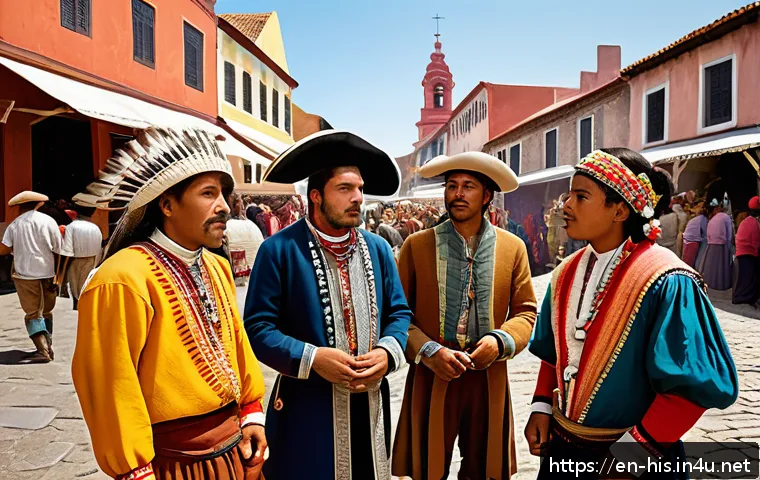
One of the most enduring impacts of this period is the rich cultural legacy left behind. The Portuguese and Spanish languages spread across continents, becoming dominant tongues in vast regions.
Beyond language, artistic styles, culinary traditions, and architectural influences traveled and merged, creating hybrid cultures. For instance, the fusion of European, African, and indigenous motifs in Latin American art and music reflects centuries of interaction initiated during this era.
Reflecting on this, I find it remarkable how competition between two empires sparked a global cultural mosaic that continues to evolve.
Diplomacy and Conflict: The Geopolitical Chessboard
Treaties and Territorial Negotiations
The Treaty of Tordesillas was just the beginning of a complex series of diplomatic maneuvers aimed at managing imperial rivalry. Over the decades, additional treaties and agreements attempted to clarify boundaries and trade rights, though enforcement was often weak.
Both empires had to constantly adapt their strategies in response to new discoveries and shifting alliances. I’ve always found it fascinating how these negotiations blended legalistic language with realpolitik, as each side sought to maximize gains without triggering full-scale war.
This diplomatic dance influenced the shape of the modern world map and set precedents for international law.
Military Engagements and Naval Battles
Despite diplomatic efforts, clashes at sea and in colonies were frequent. The Portuguese and Spanish navies engaged in battles to protect their trade routes and territorial claims.
These conflicts were high-stakes, involving massive fleets and cutting-edge naval tactics for the time. One vivid example is the Battle of Diu in 1509, where Portugal secured its dominance in the Indian Ocean by defeating a coalition that included the Mamluks and the Portuguese rivals.
These military engagements not only determined control of trade but also showcased the strategic importance of naval power, a lesson that remains relevant for modern maritime security.
Rivalry Beyond Iberia: The European Context
The competition between Portugal and Spain didn’t happen in isolation; other European powers watched closely and eventually entered the fray. Countries like England, France, and the Netherlands began challenging Iberian dominance in the late 16th and early 17th centuries, leading to a broader scramble for colonies.
This European rivalry intensified the pace of exploration and colonization but also complicated diplomatic relations. The Iberian Peninsula’s early monopoly on overseas expansion thus set the stage for centuries of global competition and conflict among emerging empires.
Comparative Overview of Portuguese and Spanish Expansion
| Aspect | Portugal | Spain |
|---|---|---|
| Primary Exploration Routes | Along Africa’s coast to India and East Indies | West across the Atlantic to the Americas |
| Key Territories | Brazil, parts of Africa, Goa, Malacca | Most of the Americas, Philippines |
| Main Commodities | Spices, gold, ivory | Silver, gold, sugar, tobacco |
| Navigation Innovations | Astrolabe, caravel ships, school of navigation | Use of Columbus’s routes, galleon ships |
| Religious Influence | Strong missionary efforts in Africa and Asia | Missionary work intertwined with colonial administration in Americas |
| Diplomatic Agreements | Treaty of Tordesillas, Treaty of Zaragoza | Treaty of Tordesillas, Treaty of Zaragoza |
| Legacy | Maritime trade empire, cultural exchanges in Asia and Africa | Colonial empire in the Americas, cultural and linguistic influence |
The Enduring Impact on Modern Global Relations
Language and Cultural Identity
Portuguese and Spanish remain among the most spoken languages worldwide, influencing millions of people’s identities across continents. The colonial legacies embedded in language foster a sense of shared history but also raise questions about cultural preservation and post-colonial identity struggles.
In countries like Brazil and Mexico, the blend of indigenous, European, and African influences creates a unique cultural tapestry that continues to evolve.
I find it compelling how language acts as a living testament to centuries-old encounters and rivalries.
Economic Patterns and Trade Networks Today
Modern global trade still echoes the patterns established during the Age of Discovery. Former colonial ports have grown into economic hubs, and former trade routes evolved into international shipping lanes.
The economic disparities rooted in colonial exploitation remain a challenge, influencing development and international relations. Reflecting on this, it’s clear that understanding the Portuguese-Spanish rivalry provides context for contemporary discussions about globalization, economic justice, and cultural exchange.
Lessons from History: Navigating Post-Colonial Realities
The story of Portugal and Spain’s maritime empires is a powerful reminder of how competition and cooperation shape world history. It urges us to critically examine the consequences of empire-building, including cultural loss, economic exploitation, and enduring inequalities.
Yet, it also highlights humanity’s capacity for innovation, adaptation, and intercultural dialogue. For anyone interested in global history, politics, or culture, revisiting this rivalry offers valuable lessons on navigating our interconnected, complex world with greater awareness and empathy.
Conclusion
The exploration and rivalry between Portugal and Spain shaped the course of global history in profound ways. Their voyages not only expanded geographical knowledge but also established enduring cultural and economic connections across continents. Reflecting on their legacy helps us understand the complexities of globalization and the intertwined fates of nations. This story remains a powerful testament to human ambition, innovation, and the consequences of empire-building.
Useful Information to Know
1. The astrolabe and magnetic compass were critical tools that enabled early navigators to travel further and more accurately than before.
2. Royal sponsorship was essential for funding expeditions, but it also came with political and religious motives that influenced exploration outcomes.
3. The Treaty of Tordesillas divided the non-European world between Spain and Portugal but did not prevent ongoing conflicts and territorial disputes.
4. The pursuit of spices and precious metals drove economic growth but also caused significant social and environmental upheaval in colonized regions.
5. The cultural exchanges resulting from these explorations created lasting legacies in language, art, and religion that continue to shape societies today.
Key Takeaways
The Portuguese and Spanish expansions highlight how technological innovation, political ambition, and economic interests intertwined to create vast maritime empires. Their rivalry set early frameworks for international diplomacy and trade that echo in today’s global systems. Understanding this history encourages a nuanced view of cultural encounters, emphasizing both cooperation and conflict. Moreover, it reminds us of the ongoing impact of colonial legacies on modern identities and global relations.
Frequently Asked Questions (FAQ) 📖
Q: How did Portugal and Spain divide the newly discovered lands during the
A: ge of Discovery? A1: The division was formalized through the Treaty of Tordesillas in 1494, which drew an imaginary line about 370 leagues west of the Cape Verde Islands.
Lands discovered east of this line belonged to Portugal, while those to the west were claimed by Spain. This agreement helped avoid conflict between the two powers as they raced to explore and colonize new territories.
For example, Brazil fell under Portuguese control due to its location east of the line, which explains why Portuguese is spoken there today. This treaty was a strategic move that shaped the colonial map for centuries and reflected the intense rivalry between these maritime empires.
Q: What lasting impacts did the rivalry between Portugal and Spain have on global culture and trade?
A: Their competition accelerated global exploration, leading to the first widespread cultural exchanges between Europe, Africa, Asia, and the Americas. This ushered in new trade routes, the spread of crops like potatoes and maize, and unfortunately, also set the stage for the transatlantic slave trade and colonization’s darker legacies.
Languages, religions, and political systems from these empires took root in various continents, influencing societies profoundly. Personally, I find it fascinating how this rivalry indirectly shaped everyday life worldwide—from the food we eat to the languages spoken in many countries.
Q: Why is understanding the Portugal-Spain rivalry still relevant in today’s world?
A: Understanding this rivalry helps us grasp how early imperialism laid foundations for modern global politics, economics, and cultural interactions. The borders, alliances, and conflicts initiated during this period still influence international relations and trade patterns.
For instance, the linguistic and cultural ties rooted in this history affect diplomacy and economic cooperation between countries today. Reflecting on this rivalry also encourages us to critically examine the lasting consequences of colonialism, helping foster a more informed and empathetic global perspective.
From my experience, knowing this history makes current world events more understandable and relevant.