Qing China’s conflicts with Western powers reshaped trade, diplomacy, legal authority, and territorial control during the nineteenth century. The Opium Wars and later treaty arrangements expanded foreign access to Qing territory while placing lasting limits on Qing sovereignty.
This history is best understood through several connected pressures rather than a simple story of “China versus the West.” For students and general readers, a reliable textbook or history course should separate treaty terms from later interpretations.
Museum collections, primary-source readers, and academic research tools can add useful context when used alongside modern scholarship. The right resource depends on whether you need a clear introduction, close document analysis, or a structured guided course.
At a Glance
- The First Opium War between Qing China and Britain lasted from 1839 to 1842 and ended with the Treaty of Nanjing.
- The treaty system opened ports, expanded foreign commercial access, and limited Qing legal authority through extraterritorial rights.
- Later conflicts, reform efforts, and the Boxer crisis show why this period cannot be explained by one war, one treaty, or one outside power alone.
| Event or System | Main Parties | What Changed | Best Study Focus |
|---|---|---|---|
| First Opium War | Qing China and Britain, 1839–1842 | The Treaty of Nanjing opened five treaty ports to British trade and ceded Hong Kong Island to Britain. | Trade conflict, naval power, and treaty terms |
| Second Opium War | Qing China, Britain, and France, 1856–1860 | The Treaties of Tianjin and Convention of Peking expanded foreign access, diplomatic privileges, and commercial rights. | Diplomacy and wider foreign demands |
| Treaty-port arrangements | Qing authorities and foreign nationals | Foreign powers gained extraterritorial rights that limited Qing legal jurisdiction over many foreign nationals. | Law, sovereignty, and urban commercial change |
| Boxer crisis | Qing China and an international military coalition, 1899–1901 | Intervention brought further financial obligations for the Qing government. | Domestic unrest and international pressure |
Why Qing China Entered Conflict with Expanding Western Empires
The short answer is that conflict grew from overlapping disputes about trade, diplomatic status, legal authority, and military power. A useful history of the period does not treat these as separate topics. They affected one another, especially when foreign commercial demands met Qing efforts to preserve control over territory and governance.
Trade imbalances, the opium trade, and the Canton System
Many introductory accounts begin with trade and the opium trade, then place the Canton System within the background of foreign commerce. That approach can be useful, but it should not turn every participant into a single-minded actor. Qing officials, merchants, missionaries, and foreign governments had varied motives across different periods. A strong textbook explains the trade setting while also showing where its evidence and interpretation are contested.
Sovereignty, diplomacy, and incompatible expectations
Questions of sovereignty were central. The Treaty of Nanjing ended the First Opium War and required Qing China to open five treaty ports to British trade. Later, the Treaties of Tianjin and the Convention of Peking expanded foreign access, diplomatic privileges, and commercial rights. These were not merely commercial documents: they also changed how foreign representatives and foreign nationals operated within Qing territory.
Why military technology and naval power mattered
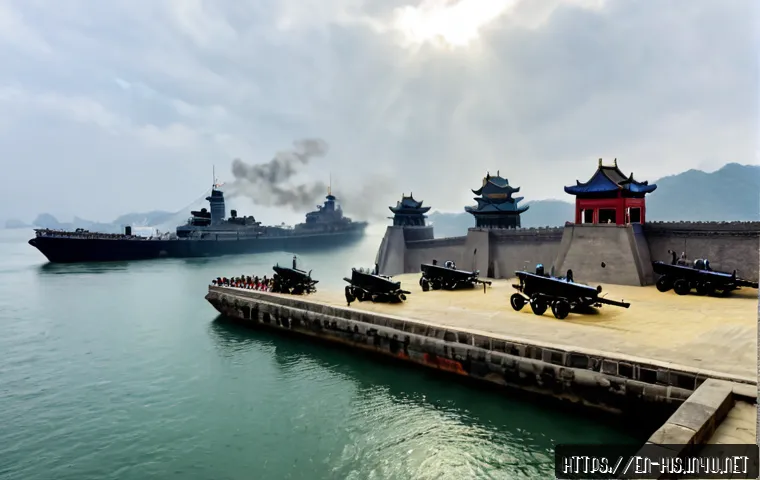
Military and naval power mattered because wars determined which demands could be imposed through treaties. Still, it is too simple to say that technology alone explains the outcome. Good historical analysis connects military pressure to diplomacy, commercial interests, internal political conditions, and the Qing government’s capacity to respond.
The Major Conflicts and Treaties at a Glance
The key distinction is between a war, the treaty that ended or followed it, and the longer system created by those agreements. Keeping those categories separate prevents a common classroom mistake: assuming every later foreign privilege began with one document.
First Opium War: causes, fighting, and the Treaty of Nanjing
The First Opium War was fought between Qing China and Britain from 1839 to 1842. The Treaty of Nanjing ended the war in 1842, opened five treaty ports to British trade, and ceded Hong Kong Island to Britain. When reading a primary source or documentary, check whether it clearly distinguishes the war’s immediate events from the treaty’s stated provisions.
Second Opium War: wider foreign demands and expanded access
The Second Opium War involved Qing China against Britain and France from 1856 to 1860. The Treaties of Tianjin and the Convention of Peking expanded foreign access, diplomatic privileges, and commercial rights in Qing territory. A course that treats this conflict as a brief footnote may miss how the later agreements widened the reach of the treaty system.
Treaty ports, extraterritoriality, and concessions compared
Treaty ports concerned access to trade and foreign presence. Extraterritorial rights limited Qing legal authority over many foreign nationals under treaty-port arrangements. These concepts overlap but are not identical. A careful resource should explain which legal or commercial privilege it is discussing rather than using “concession,” “treaty port,” and “foreign control” as interchangeable terms.
How Foreign Pressure Changed Qing Government and Society
Foreign pressure affected government authority, commercial life, and reform debates. The consequences were significant, but no single modern-dollar figure can reliably summarize the full economic cost of Western intervention. Look for sources that explain mechanisms and evidence rather than offering one dramatic total.
Limits on tariff control and legal jurisdiction
The treaty system affected Qing sovereignty through foreign commercial rights and extraterritorial arrangements. Legal jurisdiction is especially important: when foreign nationals fell outside much of Qing legal authority, the government’s control within its own territory was constrained. This is a stronger and more precise point than simply saying China “lost all control.”
Urban change in treaty ports and new commercial networks
Treaty ports became important settings for foreign trade and new commercial networks. They should not, however, be treated as identical places with identical experiences. For research papers, compare a modern scholarly account with a primary-source collection and note whether each source identifies location, date, author, and intended audience.
Reform efforts, including the Self-Strengthening Movement
The Self-Strengthening Movement sought selected Western military and industrial technologies while preserving Qing political order. This matters because it shows that Qing responses were not limited to acceptance or rejection. Reform involved choices about what could be adopted and what political structure leaders hoped to retain.
Common Interpretation Errors to Avoid
The most reliable framework is comparative: examine military, trade, legal, and sovereignty pressures together. Be cautious with explanations that promise one decisive cause for a long and complex decline.
Treating “the West” as one unified actor
Britain and France were involved in the Second Opium War, while other foreign actors and interests changed over time. “The West” can be a convenient label, but it can hide differences among governments, merchants, missionaries, and military forces.

Ignoring Qing domestic rebellions and fiscal pressures
Foreign intervention occurred alongside Qing domestic political, social, and economic pressures. Claims that one treaty or battle alone caused the fall of the Qing dynasty oversimplify a longer decline. A dependable course should make room for both foreign pressure and internal conditions.
Confusing treaty provisions with their uneven enforcement
A treaty text tells you what was formally agreed, not automatically how every provision worked in every place. Check whether a book distinguishes treaty language, enforcement, and later historical consequences. This is particularly important when using digitized archives or short educational videos.
Choosing Reliable Books, Courses, and Research Resources
Choose a learning resource based on your goal. A general reader may benefit most from an introductory history textbook, while a student writing a paper may need academic monographs, primary-source collections, and archival databases. Paying for a course or subscription makes more sense when it provides structure, expert context, and materials you will actually use.
What a strong history textbook should explain
A strong textbook should define the First and Second Opium Wars, identify the Treaty of Nanjing, the Treaties of Tianjin, and the Convention of Peking, and explain treaty ports, extraterritoriality, and the Self-Strengthening Movement. It should also avoid presenting the Qing state or foreign powers as internally uniform.
Comparing introductory courses, academic monographs, and primary-source collections
An online history course can help when you need chronological structure and guided explanation. An academic monograph is better for sustained analysis of a narrower question. A primary-source collection is valuable for examining language and perspective, but it needs historical context; documents alone do not settle interpretation.
When a museum program, lecture series, or guided course adds value
Museum learning materials, public lectures, and guided courses add value when they identify their curators or instructors, cite collection information, and explain how objects or documents fit the wider history. Before choosing a paid resource, review the syllabus, reading list, instructor background, access period, and whether the level matches your needs.
Selection Criteria and Comparison Summary
Before selecting a textbook, online course, archival database, or museum program, check these points:
- Scope: Does it cover both wars, treaty arrangements, and later reform efforts?
- Source quality: Does it distinguish primary sources from modern scholarship?
- Interpretation: Does it avoid one-cause explanations for the Qing decline?
- Learning format: Do you need a survey textbook, a guided course, or research-level documents?
- Transparency: Are the instructor, author, citations, access terms, and included materials clearly stated?
For course enrollment, database subscriptions, or guided museum options, review the official description and full access conditions on the relevant page before paying.
Conclusion
Qing China’s confrontation with Western powers changed far more than trade routes. The wars and treaties affected diplomacy, territorial control, legal jurisdiction, and reform debates within the Qing state. The clearest interpretation compares these pressures instead of reducing the period to a single clash between two civilizations. Careful reading of treaty terms and historical context makes the subject easier to understand.
Useful Context
Primary sources show what people wrote or recorded at the time, but they can reflect limited viewpoints and political purposes.
Modern scholarship compares evidence, interpretations, and historical context; it is often the best starting point for major claims.
Short summaries are useful for review, but they may leave out uncertainty, domestic pressures, and uneven enforcement.
Important Limitations
The exact economic cost of Western intervention cannot be reduced to one reliable modern-dollar figure. Individual motives varied across groups and periods, so broad claims about what all Qing officials or all foreign actors wanted need verification. Treaty provisions should also be checked against the specific place, date, and enforcement context being discussed.
Frequently Asked Questions
Q1. Why did the Qing dynasty lose the Opium Wars to Britain and other Western powers?
A1. Military and naval power mattered, but it is incomplete to treat technology as the only explanation. The conflicts also involved trade disputes, diplomacy, sovereignty, legal authority, and the Qing government’s wider internal pressures. A balanced account considers these factors together.
Q2. What were the unequal treaties, and how did they affect China’s sovereignty?
A2. The term commonly refers to treaty arrangements that expanded foreign privileges in Qing territory. The Treaty of Nanjing opened five treaty ports to British trade and ceded Hong Kong Island to Britain. Later agreements expanded foreign access, diplomatic privileges, commercial rights, and extraterritorial arrangements that limited Qing legal authority over many foreign nationals.
Q3. Are paid online history courses worth it for learning about Qing China and Western imperialism?
A3. They can be worthwhile if you need a structured sequence, instructor guidance, assigned readings, and clear source references. Check whether the course covers the treaties as well as the wars, identifies its scholarly materials, and explains its access terms before enrolling.