Hey there, history buffs and curious minds! It’s fantastic to have you back on the blog today. I’ve been absolutely fascinated lately by how past events continue to shape our world, especially when it comes to understanding the intricate dance of global power.
If you’re anything like me, you’ve probably noticed how often discussions about current international relations, trade routes, or even cultural shifts bring us right back to pivotal moments from yesteryear.
It’s like peeking behind the curtain of today’s headlines to see the foundational stories that truly explain everything. And honestly, for anyone looking to truly grasp the nuances of geopolitics, or even just make more informed predictions about where things are headed, a deep dive into history isn’t just helpful – it’s absolutely essential.
I’ve found that unpacking these historical layers not only enriches my understanding but also makes current events feel so much more connected and less random.
So, let’s peel back some of those layers today and explore a truly transformative period. Have you ever wondered about the true turning points that irrevocably altered the course of East Asian history?
I certainly have, and one conflict always stands out in my mind: the First Sino-Japanese War. It was more than just a clash of empires; it was a seismic event that reshaped the entire regional hierarchy, setting the stage for much of what we see playing out even today.
From my perspective, understanding this war isn’t just about dates and battles; it’s about recognizing the shifting tides of power, the clash of ideologies, and the profound impact on national identities that reverberated for decades.
This conflict truly marked the dramatic unraveling of an old order and the turbulent birth of a new one. Let’s uncover the full story and its far-reaching consequences.
The Korean Catalyst: A Powder Keg Ignites
A Peninsula of Perilous Ambition
The Korean Peninsula, strategically nestled between powerful neighbors, became the unwitting stage for the escalating tensions that ultimately exploded into the First Sino-Japanese War.
For centuries, Korea had maintained a delicate tributary relationship with Qing China, a bond that symbolized China’s traditional dominance in East Asia.
However, Japan, having undergone its rapid Meiji Restoration, looked to Korea not as a vassal state but as a crucial step in its own imperial expansion and a buffer against continental powers.
I often think about how deeply intertwined geography is with destiny, and Korea’s location certainly proved to be a double-edged sword, offering both opportunity and vulnerability.
This period saw Japan actively challenging Qing’s suzerainty, pushing for reforms in Korea that would align it more closely with Japanese interests, creating an undeniable friction point that simply couldn’t hold forever.
It was less about what Korea wanted and more about what the powerful players surrounding it envisioned for its future, a truly heartbreaking situation for the Korean people.
Rising Tensions and the Donghak Rebellion
The tipping point arrived with the Donghak Peasant Rebellion in Korea. This internal uprising, fueled by economic hardship and anti-foreign sentiment, offered both China and Japan a pretext to intervene.
Korea, unable to quell the rebellion independently, reluctantly requested assistance from Qing China, which promptly dispatched troops. Japan, seeing this as a direct challenge to its own influence and a violation of previous agreements (like the Convention of Tianjin), swiftly responded by sending its own forces, purportedly to protect its citizens and legation.
I can only imagine the palpable tension in the air as these two mighty, yet very different, powers lined up their armies on foreign soil. It felt like watching two magnets being pushed together against their will, with the inevitable clash becoming clearer by the day.
What began as an internal Korean issue quickly morphed into an international crisis, demonstrating how easily local unrest could be exploited by larger, more ambitious powers.
This moment, for me, truly highlighted the precarious balance of power in the region and how easily it could be upended.
A Clash of Eras: Modern Might vs. Fading Glory
Japan’s Meiji Modernization Machine
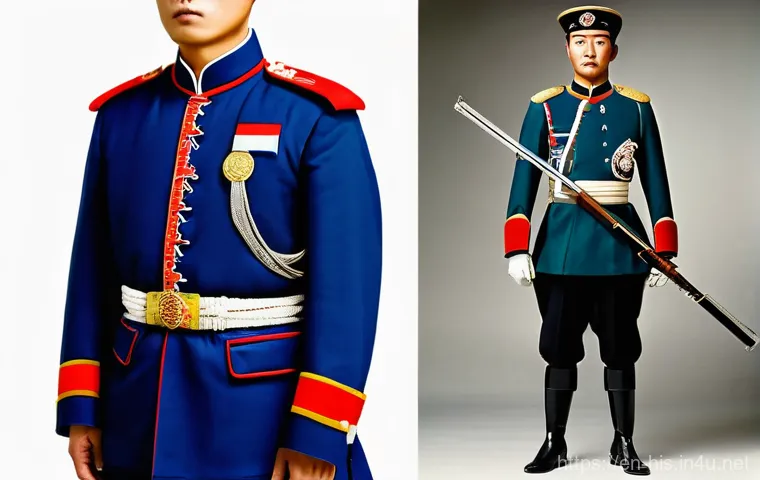
Stepping into the 19th century, Japan had consciously and aggressively embraced Western industrial and military reforms following the Meiji Restoration.
They meticulously studied European naval strategies, adopted German military doctrines, and invested heavily in modern armaments, building a professional, well-drilled army and a formidable modern navy.
When I look back at this period, I’m always struck by Japan’s relentless drive and foresight. They truly understood that survival and prosperity in the new global order depended on strength and adaptability.
This transformation wasn’t just superficial; it permeated their entire society, fostering a sense of national purpose and technological advancement that was genuinely groundbreaking for an Asian nation at the time.
Their military was not just equipped with modern weapons; it was imbued with a modern command structure and a deeply ingrained fighting spirit, a stark contrast to their continental counterpart.
Qing China’s Self-Strengthening Struggles
In stark contrast, Qing China, despite its “Self-Strengthening Movement,” remained largely rooted in traditional ways. While they did purchase some modern weapons and build arsenals and dockyards, these efforts were often piecemeal, plagued by corruption, bureaucratic inefficiency, and a lack of holistic reform.
The core imperial system, with its emphasis on Confucian ideology and a decentralized military, struggled to adapt to the demands of modern warfare. It’s like building a high-performance engine but then fitting it into a horse-drawn carriage – the parts are modern, but the overall system just isn’t designed for speed.
I often feel a pang of sadness thinking about the missed opportunities and internal resistance that hampered Qing’s ability to truly modernize. The leadership often viewed Western technology as merely tools to buttress the existing order, rather than as catalysts for fundamental systemic change.
This fundamental difference in approach to modernization was a critical factor in the war’s outcome, showing that simply having the technology isn’t enough; you need the entire infrastructure, both material and ideological, to support it.
The Battlefield Unfolds: A Shocking Display of Power
Naval Dominance and Decisive Land Engagements
When the war officially broke out in July 1894, the scale of Japan’s preparedness became painfully evident. The Japanese Imperial Navy, with its fast, well-armed cruisers and disciplined crews, quickly established superiority at sea.
The Battle of the Yalu River, a major naval engagement, saw the Japanese fleet inflict heavy losses on the antiquated Beiyang Fleet, China’s most modern naval force.
On land, Japanese forces, meticulously trained and strategically superior, achieved rapid victories. They systematically captured key strongholds like Pyongyang, Port Arthur, and Weihaiwei, demonstrating a level of coordination and tactical prowess that stunned contemporary observers.
I remember studying these battles and feeling a sense of dread for the Qing forces; it was almost like watching a perfectly synchronized machine dismantle something far older and clunkier.
The speed and efficiency of the Japanese advance really underscored the vast military disparity that had developed between the two nations.
A Modern War on Ancient Soil
The fighting was intense, marked by sieges, naval bombardments, and brutal hand-to-hand combat. However, the consistent thread throughout these engagements was the superior organization, logistics, and morale of the Japanese forces.
They fought with a clear purpose and strategy, while the Qing army often suffered from poor leadership, inadequate supplies, and a lack of unified command.
For me, this war wasn’t just about big battles; it was about the cumulative effect of countless smaller skirmishes where Japanese tactical advantages consistently shone through.
The modern weaponry combined with disciplined troops meant that even numerical superiority on China’s part often failed to translate into victory. The narrative of this war really hammers home the point that military strength isn’t just about numbers or raw firepower; it’s about how those elements are integrated, managed, and motivated.
Redrawing the Map: Treaties and Territories
The Treaty of Shimonoseki’s Harsh Terms
The crushing Japanese victories left Qing China with no option but to sue for peace. The resulting Treaty of Shimonoseki, signed in April 1895, was a brutal humiliation for China and a monumental triumph for Japan.
I’ve always thought about how the terms of peace treaties often reflect the victor’s ambition, and Shimonoseki was no exception. Under its provisions, China was forced to recognize the “full and complete independence” of Korea, effectively ending its traditional tributary relationship.
More significantly, China ceded Taiwan (Formosa) and the Pescadores Islands to Japan in perpetuity, and granted Japan control over the Liaodong Peninsula.
Furthermore, China was compelled to pay an enormous war indemnity, equivalent to roughly 360 million yen, a sum that severely crippled its already strained finances.
It wasn’t just a loss of territory; it was a profound blow to China’s sovereignty and self-esteem.
The Triple Intervention: A European Shadow
However, Japan’s gains, particularly the Liaodong Peninsula, immediately raised alarm bells among certain European powers who had their own imperialistic designs on China.
Just six days after the treaty was signed, Russia, Germany, and France intervened, issuing the “Triple Intervention,” demanding that Japan return the Liaodong Peninsula to China in exchange for an increased indemnity.
Japan, still militarily exhausted and unwilling to confront the combined might of these European powers, reluctantly complied. This moment is always so fascinating to me because it shows that even a dominant victor could be curtailed by the larger geopolitical landscape.
It was a clear demonstration of European colonial interests dictating terms in East Asia, temporarily curbing Japan’s territorial ambitions but perhaps also fueling its resentment and future expansionist desires.
This intervention, while seemingly for China’s benefit, merely highlighted its continuing vulnerability to foreign encroachment.
Echoes Through Time: The War’s Enduring Legacy
Seeds of Future Conflicts
The First Sino-Japanese War didn’t just end one conflict; it effectively planted the seeds for several others. The humiliation felt by China, combined with the territorial concessions and the financial burden, intensified anti-foreign sentiment and contributed directly to the rise of nationalist movements, including the Boxer Rebellion a few years later.
The war also spurred China’s ultimate collapse as an imperial power, paving the way for the Xinhai Revolution in 1911 and the establishment of the Republic of China.
I can almost feel the historical ripples emanating from this single event, touching everything that came after. For Japan, the war solidified its position as a regional power, but the Triple Intervention left a bitter taste, reinforcing a belief that only greater military strength could secure its place in the world, leading directly to the Russo-Japanese War a decade later.
It’s truly a cascade of cause and effect that kept me thinking about the intricate connections in history.
Nationalism Awakens Across Asia
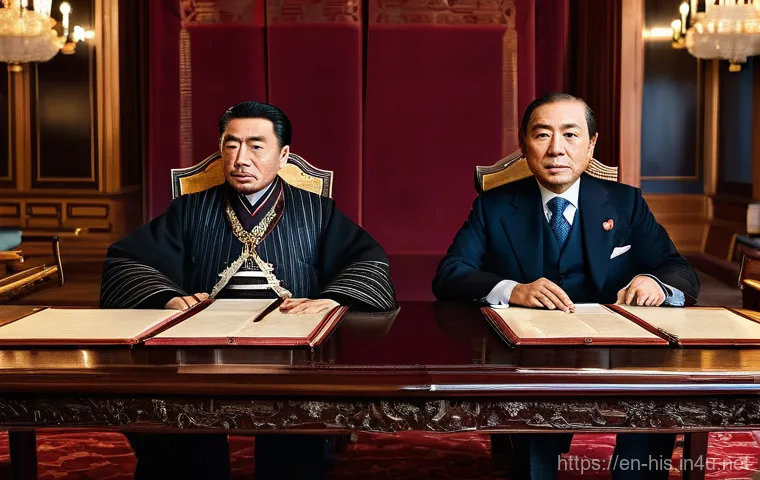
Perhaps one of the most profound, yet often overlooked, legacies of the war was the powerful awakening of nationalism across East Asia. For China, the defeat shattered the illusion of its own imperial might and sparked a desperate search for national rejuvenation.
Intellectuals and reformers began advocating for radical change to save the nation from further dismemberment. In Korea, while technically “independent,” the war only substituted Chinese influence for Japanese, leading to a deepening sense of national grievance and a push for true self-determination that would continue for decades.
Japan’s victory, meanwhile, fueled its own burgeoning nationalism, fostering a sense of pride and a belief in its destiny as the leader of Asia. I’ve always felt that understanding these surges of national identity is key to grasping 20th-century East Asian history, and this war was undoubtedly a pivotal moment in their formation.
| Aspect | Qing China | Meiji Japan |
|---|---|---|
| Military Preparedness | Outdated, decentralized, bureaucratic | Modernized, centralized, disciplined |
| Naval Power (e.g., Beiyang Fleet) | Purchased modern ships, but poor maintenance/training | Well-maintained, highly trained, strategically superior |
| Industrial Capacity | Limited, hampered by corruption and lack of integration | Rapidly developing, state-supported, integrated |
| Political System | Traditional imperial system, resistant to deep reform | Centralized constitutional monarchy, pro-reform |
| Key Outcomes of War | Humiliating defeat, loss of territory, heavy indemnity | Decisive victory, territorial gains (initially), regional dominance |
Beyond Borders: Global Reactions and Repercussions
Western Powers Take Notice
The swift and decisive Japanese victory sent shockwaves through the Western world. European powers, who had largely dismissed Japan as a minor player, were forced to acknowledge its emergence as a significant military force in Asia.
This shift was profound. For centuries, Western nations had seen China as a vast, rich but ultimately weak empire ripe for carving up into spheres of influence.
Japan’s ability to defeat China so thoroughly upended this perception and forced a reevaluation of the regional power dynamics. I can only imagine the conversations happening in diplomatic circles in London, Paris, and Berlin—suddenly, there was a new kid on the block, and they were playing by different rules.
This recognition, however, also came with a dose of apprehension, as a strong Japan posed a potential challenge to established colonial interests, leading to the Triple Intervention as mentioned earlier.
It was a moment of global recalculation.
The Shifting Balance of Power
The war undeniably accelerated the scramble for concessions in China by Western powers, who now viewed the Qing Dynasty as even weaker and more vulnerable.
It initiated a period of intensified imperialistic activity in China, with various European nations and the United States carving out new spheres of influence, leasing territories, and securing economic privileges.
This period marked a distinct shift from a more subtle form of influence to overt territorial and economic exploitation. From my perspective, this really illustrates how power vacuums are always filled, and China’s loss became Europe’s gain, at least for a while.
The war essentially signaled the official end of China’s long-standing regional hegemony and ushered in a new era of multi-polar competition and aggressive colonialism in East Asia, shaping the geopolitical map for decades to come and contributing to the global instability that would erupt in the early 20th century.
A New Dawn (or Dusk?): The Rise of Japan and the Decline of Qing
Japan’s Ascent to Great Power Status
The First Sino-Japanese War was Japan’s coming-out party on the world stage. It unequivocally established Japan as the dominant military and political power in East Asia, fundamentally altering the regional hierarchy that had been in place for centuries.
The victory boosted national confidence, fueled further industrialization and military expansion, and provided Japan with its first significant overseas colonies in Taiwan and the Pescadores.
I often find myself reflecting on how a single conflict can so dramatically pivot a nation’s trajectory. For Japan, this war solidified its status, earning it grudging respect from Western powers and setting the stage for its continued imperial ambitions, which would define much of its foreign policy in the subsequent decades.
This period truly marked the beginning of Japan’s journey to becoming a formidable global player, albeit one with an increasingly aggressive posture.
The Waning Years of the Qing Dynasty
Conversely, for the Qing Dynasty, the defeat was a catastrophic blow from which it never truly recovered. The war exposed the fundamental weaknesses of its “Self-Strengthening Movement” and underscored the deep-seated corruption and inefficiency within its governance.
The loss of territory, the massive indemnity, and the sheer humiliation ignited widespread dissent and revolutionary fervor across China. It accelerated the decay of an already faltering empire, demonstrating that its traditional claims to suzerainty and power were utterly baseless in the face of modern warfare.
I always feel a profound sense of historical irony looking at this, as an empire that had dominated the region for centuries crumbled so rapidly. The First Sino-Japanese War was essentially the nail in the coffin for the Qing Dynasty, sealing its fate and paving the way for the turbulent birth of modern China.
It truly was the end of an era.
Lessons Learned: What This Conflict Still Teaches Us
The Imperative of Adaptation
Looking back at the First Sino-Japanese War, one of the most striking lessons, in my opinion, is the absolute imperative for nations to adapt to changing global landscapes.
Japan’s proactive and wholesale adoption of modern Western systems, both military and industrial, stood in stark contrast to China’s more hesitant and superficial reforms.
This difference wasn’t just about technology; it was about mindset, governance, and national strategy. I’ve always believed that historical events serve as powerful case studies, and this war unequivocally demonstrates that clinging to tradition or resisting fundamental change in the face of evolving global dynamics can have catastrophic consequences.
It’s a powerful reminder that continuous learning and strategic evolution are not luxuries, but necessities for survival and prosperity in an interconnected world.
Understanding Modern Geopolitics
Finally, for anyone trying to make sense of today’s complex geopolitical environment in East Asia, this war offers invaluable context. The rivalries, resentments, and nationalistic aspirations that were ignited or intensified by the First Sino-Japanese War continue to reverberate, shaping everything from territorial disputes to economic competition and diplomatic relations in the region.
Understanding the historical roots of these dynamics—the rise of Japan, the humiliation of China, the fate of Korea—is essential to truly grasp the nuances of current events.
It helps us see that today’s headlines aren’t isolated incidents but rather continuations of long-standing historical narratives. For me, connecting these dots makes the present much clearer and offers a deeper appreciation for the intricate tapestry of international relations.
It truly underscores how the past isn’t just history; it’s the very foundation of our present and future.
Wrapping Things Up
And there you have it, my friends! Diving deep into the First Sino-Japanese War really opens your eyes to how foundational these historical conflicts are. It’s not just a collection of dates and names, but a living narrative that explains so much about the world we inhabit today, particularly the nuanced relationships and power dynamics in East Asia. I genuinely hope this journey through time has been as illuminating for you as it was for me in putting it all together. Understanding these pivotal moments truly enriches our perspective and helps us connect the dots between past, present, and even future.
Useful Information to Know
Here are a few nuggets of wisdom and interesting tidbits I’ve picked up that you might find super helpful, especially if you’re keen on exploring this fascinating period further:
1. While the Treaty of Shimonoseki ended the war, it truly set the stage for Japan’s aggressive expansionism in the coming decades, culminating in World War II. It’s like watching the first domino fall in a very long, complex chain. Don’t forget to look at the immediate aftermath for the real consequences.
2. The immense war indemnity imposed on China was not just a financial drain; it was a psychological one, too. It funded much of Japan’s subsequent industrial and military growth, illustrating how the spoils of war literally powered the victor’s future dominance.
3. The concept of “gunboat diplomacy” was very much alive and well during this era. Western powers frequently used their naval superiority to exert influence and extract concessions from weaker nations, a stark reminder of the power dynamics at play during the colonial period.
4. If you’re ever visiting museums in East Asia, especially in Japan, China, or Korea, you’ll often find artifacts and exhibits from this war. It’s a powerful way to connect with the history firsthand and really feel the weight of these events. I always recommend seeing history where it happened if you can!
5. The First Sino-Japanese War is often overshadowed by the Russo-Japanese War (1904-1905), but it’s crucial to understand that the earlier conflict established the military and political precedents that made the latter inevitable. Think of it as the dress rehearsal for an even bigger regional power struggle.
Key Takeaways
Reflecting on this transformative period, what truly strikes me is the undeniable truth that history offers invaluable lessons for understanding our present and navigating our future. The First Sino-Japanese War serves as a stark reminder of the critical importance of adaptation and strategic foresight in a rapidly changing world. Japan’s commitment to wholesale modernization, from military doctrine to industrial capacity, undeniably outmaneuvered Qing China’s more superficial attempts at reform, ultimately leading to a shift in regional power that reverberates to this day. This wasn’t just about who had the bigger guns; it was about who had the clearer vision and the more integrated approach to national development. As someone who’s spent countless hours poring over historical accounts, I’ve come to appreciate that the emotional and psychological impact of such a defeat or victory can deeply shape a nation’s identity and ambitions for generations. For China, it was a profound blow that ignited fervent nationalism and revolutionary movements, while for Japan, it fueled a sense of destiny and further imperial aspirations. It’s a powerful testament to how historical events aren’t isolated incidents, but rather interconnected threads in the vast tapestry of human experience, constantly shaping our international relations, economic landscapes, and even our cultural narratives. Truly, understanding these echoes from the past is indispensable for anyone hoping to truly grasp the complex dance of global power today.
Frequently Asked Questions (FAQ) 📖
Q: uestions
A: bout the First Sino-Japanese War
Q: What were the main reasons this war broke out, and why did it escalate so quickly?
A: Oh, this is a fantastic question that gets right to the heart of the matter! You know, when we look at the First Sino-Japanese War, it wasn’t just one single event that caused it, but a potent brew of long-simmering tensions and ambitions, especially concerning Korea.
From what I’ve gathered, and really, from my own deep dives into the history, Korea was the undisputed flashpoint. For centuries, China had seen Korea as its most important client state, a long-standing tributary relationship that defined the regional order.
But then you have Japan, fresh off its incredible Meiji Restoration, which was all about rapid modernization, industrialization, and building a strong military—basically, catching up with and even surpassing Western powers.
Japan started eyeing Korea not only for its strategic location, which is super close to their islands, but also for its valuable natural resources like coal and iron.
They wanted to assert their own influence and even force Korea to declare independence from China, which, as you can imagine, China did not take kindly to.
The immediate spark that set everything ablaze was the Donghak Peasant Revolution in Korea in 1894. When the Korean government, struggling to quell the rebellion, asked China for help, China sent troops in.
Japan, feeling that this violated an earlier agreement (the Li-Itō Convention) that required both countries to notify each other before sending troops into Korea, decided to send its own troops, about 8,000 of them.
It was essentially a direct challenge to China’s traditional authority. I think what truly sped up the escalation was Japan’s clear determination to project its newly acquired strength and challenge China’s centuries-old dominance, combined with China’s stubborn refusal to recognize Japan as an equal regional power.
It was a clash of an old, struggling empire trying to hold onto its prestige against a young, ambitious, and aggressively modernizing nation.
Q: What were the immediate and long-term consequences of Japan’s victory for both China and Japan, and the wider East
A: sian region? A2: The consequences, both immediate and far-reaching, were absolutely monumental, truly reshaping East Asia in ways that echo even today.
Honestly, when I look at the Treaty of Shimonoseki, signed in April 1895, it’s clear it was a brutal wake-up call for China and a massive victory lap for Japan.
Immediately, China was forced to recognize Korea’s “full and complete independence,” which effectively severed its traditional tributary relationship and opened the door for Japan to eventually assert control over the peninsula.
Beyond that, China had to cede some significant territories to Japan: Taiwan, the Penghu Islands, and initially, even the Liaodong Peninsula (though Russia, Germany, and France later intervened and forced Japan to return Liaodong to China, which really irked the Japanese!).
Plus, China had to pay a huge indemnity of 200 million taels, which was a staggering amount at the time, and open up more treaty ports for Japanese trade.
For China, it was a deeply humiliating defeat that exposed the profound weakness of the Qing dynasty to the entire world. In the long term, this war had a domino effect.
For China, it shattered any lingering sense of its traditional superiority and accelerated internal unrest, fueling calls for radical reform and eventually contributing to revolutionary movements that led to the downfall of the Qing Dynasty in 1911.
It also encouraged other Western powers to make even more demands on China, kicking off what many historians call the “scramble for concessions”. For Japan, on the other hand, this victory was a massive validation of its Meiji Restoration and its rapid modernization efforts.
It dramatically boosted Japan’s status, propelling it onto the world stage as a major imperial power, capable of rivaling Western nations. This newfound confidence and imperial ambition set the stage for Japan’s future expansionist policies and later conflicts, like the Russo-Japanese War.
In Korea, the war ended its centuries-long relationship with China, but tragically, it also marked the beginning of increased Japanese encroachment that would culminate in colonization.
It’s truly mind-boggling how much changed in such a short period, and it laid down many of the foundational resentments and power dynamics we still grapple with in East Asia today.
Q: Why is the First Sino-Japanese War considered such a pivotal moment in history, truly a “turning point”?
A: Ah, this is the million-dollar question, isn’t it? From my vantage point, and after soaking up so much historical context, calling the First Sino-Japanese War a “turning point” feels almost like an understatement—it was more like a seismic shift that cracked open the old order and birthed a new one in East Asia.
What makes it so pivotal, I believe, is the complete reversal of regional dominance it brought about. For millennia, China had been the unquestioned cultural, political, and economic hegemon in East Asia.
Its classical tradition and imperial system were seen as the pinnacle. But this war, in just a little over eight months, utterly dismantled that perception.
Japan, a relatively small island nation, definitively proved that its rapid Westernization and modernization had created a formidable military and industrial power that could not only stand on its own but also decisively defeat the “Sleeping Giant” of China.
This was incredibly significant because it shattered the myth of Chinese superiority and taught a painful lesson: partial modernization without fundamental institutional reform was insufficient in the age of imperialism.
The war didn’t just alter borders; it fundamentally reconfigured the balance of power, ushering in an era where Japan, rather than China, became the dominant imperial player in the region.
It also had a huge psychological impact. For China, the defeat was deeply humiliating and fueled intense nationalism and calls for radical change that ultimately led to the end of imperial rule.
For Japan, it solidified a sense of national pride and justified its aggressive pursuit of a larger sphere of influence. It essentially set the trajectory for East Asian geopolitics for the next century, influencing everything from subsequent wars to the rise of modern nation-states.
So, when I think about it, the First Sino-Japanese War wasn’t just an event; it was the event that irrevocably changed East Asia’s destiny.