You know, sometimes I look around at our amazing modern world – from the clocks ticking away our precious minutes to the intricate cityscapes we navigate daily – and I just marvel at how far we’ve come.
But what if I told you that many of the fundamental building blocks of our sophisticated lives were laid thousands of years ago in a land often called the ‘cradle of civilization’?
We’re talking about Mesopotamia, a place bursting with ingenuity, where people figured out how to tame rivers, write down their thoughts, and even measure the very fabric of time itself.
It’s truly mind-blowing to think about how their ancient breakthroughs continue to echo in our technology and daily routines, shaping our present and even hinting at our future innovations.
It makes you wonder, doesn’t it, how much more we can learn by looking back? Let’s dive deep into the incredible technological prowess of Mesopotamian civilization and uncover the secrets they left for us.
Unlocking Thoughts: The Birth of the Written Word
You know, it’s wild to think about a world without writing. How would we share our stories, record our histories, or even just keep track of things? Well, for millennia, that was the reality for humanity. But then, in Mesopotamia, something truly revolutionary happened: the invention of writing. It wasn’t just a simple scribble; it was a complex system that would completely change how humans interact, organize, and even think about the world around them. When I look at ancient cuneiform tablets, I don’t just see symbols; I see the very beginning of our collective memory, preserved for thousands of years. It’s absolutely mind-boggling how those first wedge-shaped marks, made with reed styluses on wet clay, paved the way for every book, every email, and every blog post we read today. The Sumerians, those brilliant minds of early Mesopotamia, started with pictographs, literally drawing what they were talking about. But they quickly realized that drawing a bull for “bull” was one thing, but how do you express “love” or “justice”? So, it evolved, becoming more abstract, blending sounds and meanings until we got cuneiform. This wasn’t just about recording transactions; it was about capturing the human experience, laws like Hammurabi’s Code, and epic tales such as Gilgamesh, allowing ideas to transcend individual lives and become part of a lasting civilization.
From Pictograms to Phonetics: Cuneiform’s Journey
Initially, this writing started very simply, almost like a drawing system where a symbol directly represented an object. Think about it, if you needed to record four sheep, you’d just draw four sheep. Practical, right? But as society grew more complex, and people needed to express more than just simple nouns, this system needed an upgrade. It gradually shifted, with symbols beginning to represent sounds (phonetics) or broader concepts (ideograms) rather than just direct objects. This evolution was crucial because it allowed for far greater flexibility and abstraction, enabling the Sumerians and later Mesopotamian cultures to record intricate laws, elaborate myths, and detailed administrative records. The wedge-shaped marks, or “cuneus” in Latin, which gave cuneiform its name, were perfect for quickly impressing into soft clay, making it a surprisingly efficient method for record-keeping in a world without paper. It’s truly astonishing how a system developed thousands of years ago in a distant land laid the groundwork for the alphabets we use in English today.
The Enduring Legacy: How Writing Shaped Society
The impact of writing was, quite simply, monumental. It ushered in an era of unprecedented organization and knowledge transfer. Imagine trying to manage a large city, coordinate complex irrigation projects, or administer justice without any written records. It would be an absolute nightmare! Writing allowed for precise laws, structured governance, and detailed economic transactions, fostering stability and growth. It also meant that knowledge and wisdom could be passed down accurately through generations, building upon previous discoveries rather than starting from scratch each time. I often wonder what our world would look like if this invention hadn’t happened. We’d likely be centuries behind in technological and social development. So, every time I type out a blog post or even jot down a note, I feel a tiny connection to those ancient scribes diligently pressing their styluses into clay, shaping the very foundation of human civilization.
Rolling Towards Progress: The Wheel’s Ancient Journey
When you think about fundamental inventions, the wheel has got to be right up there, hasn’t it? It’s one of those things we totally take for granted today – from our cars to luggage, wheels are everywhere. But guess what? The brilliant minds in Mesopotamia were the ones who truly set things in motion, literally! The oldest known wheel may have been found elsewhere, but the *concept* and early application are strongly linked to the Sumerians. It blows my mind to think that what started as a way to make pottery more efficiently eventually transformed transportation and warfare. I often try to imagine the sheer astonishment and relief people must have felt when they first saw heavy goods moving effortlessly on a wheeled cart, a stark contrast to dragging everything manually. This wasn’t just a convenience; it was a game-changer for trade, agriculture, and military logistics, dramatically increasing efficiency and expanding horizons for ancient Mesopotamian civilizations.
Revolutionizing Production: The Potter’s Wheel
Believe it or not, the wheel’s first starring role wasn’t in transportation, but in the pottery workshop! Around 3500 BCE, the Mesopotamians invented the potter’s wheel. Before this, every pot, every vessel, was painstakingly shaped by hand. Can you imagine the time and effort that went into producing enough ceramics for a growing population? The potter’s wheel completely revolutionized this process, allowing for the mass production of uniform, high-quality pottery. This meant more affordable bowls and jars for everyone, and it freed up artisans to specialize further, boosting the economy. When I see beautifully crafted ceramics, I sometimes think about the silent revolution that started on a spinning wheel thousands of years ago, enabling communities to feed, store, and trade more effectively.
Wheeled Wonders: From Carts to Chariots
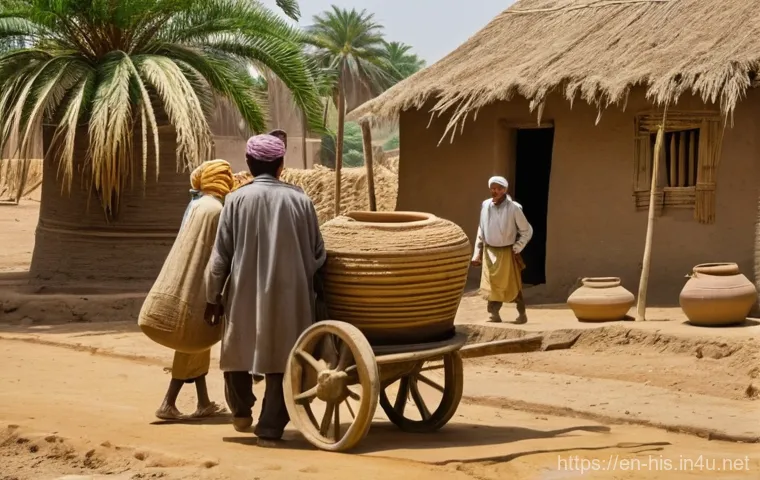
It didn’t take long for the Mesopotamians to realize the wheel’s potential beyond pottery. By around 3000 BCE, they adapted it for vehicles, leading to the creation of carts and wagons. This was a huge leap! Suddenly, transporting heavy goods over longer distances became infinitely easier, which was absolutely vital for trade and the development of large urban centers. Think about moving building materials for those massive ziggurats, or grain from the fields to the city granaries—the wheel made it all possible. Later, this innovation was applied to warfare with the invention of the chariot. Just picture the impact these fast, horse-drawn vehicles had on the battlefield, giving a massive advantage to armies that employed them. It truly transformed not just how people lived and worked, but also how they fought and defended their burgeoning empires. The sheer ingenuity of these early engineers continues to impress me every single day.
Taming the Rivers: A Hydro-Engineering Marvel
For me, one of the most incredible aspects of Mesopotamian ingenuity has to be their mastery over water. Living “between the rivers” – the Tigris and Euphrates – meant both incredible fertility and terrifying unpredictability. These rivers were life, but also a constant threat with their annual floods. It wasn’t enough to just settle by the water; they had to *control* it. And boy, did they! The large-scale irrigation systems they developed were nothing short of an engineering marvel, transforming arid lands into bountiful fields and enabling the growth of the very first cities. When I think about the sheer manpower and organizational skill required to plan and build these vast networks of canals, reservoirs, and dams, it genuinely makes my head spin. They weren’t just digging ditches; they were crafting a meticulously planned infrastructure that sustained entire civilizations, allowing for agricultural surpluses that fed thousands.
Building the Lifelines: Canals and Ditches
The core of Mesopotamian irrigation was a sophisticated network of canals and ditches. Early farmers faced the constant challenge of either too much water during floods or too little during dry spells. They quickly realized they needed to regulate this flow. What started as small-scale efforts to siphon water directly from the rivers soon evolved into massive, state-organized projects. Civil engineers of the time meticulously planned and constructed these lifelines, often lining them with mud brick to prevent erosion and ensure steady water flow. I can only imagine the communal effort involved in both building and maintaining these systems—it truly fostered a sense of collective purpose. These canals weren’t just for crops; they were also vital for transporting goods and facilitating trade, essentially acting as the highways of their time.
Clever Contraptions: Water-Lifting Technologies
As their agricultural needs grew and settlements expanded away from immediate riverbanks, the Mesopotamians innovated with water-lifting devices. We’re talking about tools like the shaduf, a simple yet effective counterweighted lever, and potentially even early versions of the Archimedes’ screw. These inventions allowed them to lift water from lower elevations to higher fields, extending the reach of their irrigation systems even further. This level of ingenuity, using basic physics and mechanics to solve complex problems, really highlights their practical brilliance. It wasn’t just about moving water, it was about maximizing arable land and ensuring food security for a burgeoning population, directly supporting the growth of those impressive urban centers like Uruk and Ur. These ancient methods, in a way, laid the groundwork for modern hydraulic engineering, proving that sometimes the simplest solutions are the most enduring.
Precision in Time and Space: Mastering Numbers and the Cosmos
Have you ever stopped to wonder why our clocks have 60 minutes in an hour, and 60 seconds in a minute? Or why a circle has 360 degrees? It’s not arbitrary; these fundamental measurements of time and space are a direct inheritance from ancient Mesopotamia! The Mesopotamians, particularly the Sumerians and Babylonians, developed an incredibly sophisticated sexagesimal (base-60) mathematical system. This wasn’t just for academic curiosity; it was deeply intertwined with their daily lives, from trade and accounting to monumental architecture and, crucially, their understanding of the heavens. When I think about their advancements, I’m always amazed that they achieved so much without the calculators or computers we rely on today. Their intellectual curiosity was boundless, laying the groundwork for much of what we consider modern mathematics and astronomy.
The Rhythms of Life: Timekeeping and Calendars
The Mesopotamians were obsessed, in a good way, with time. They meticulously observed the cycles of the moon, which led to the creation of one of the earliest lunisolar calendars, a system still influencing calendars today. They even added “leap months” to keep their lunar calendar aligned with the solar year, which is just brilliant when you think about it! Their division of the day into 24 hours, and then those hours into 60 minutes and minutes into 60 seconds, is a testament to their enduring influence. Imagine trying to plan agricultural cycles, religious festivals, or trade expeditions without a standardized way to measure time. It would be chaos! Their system provided a reliable framework for organizing societal life, a bedrock upon which future civilizations would build. It makes you appreciate those small, ticking hands on your watch a little more, knowing their lineage stretches back thousands of years.
Mapping the Heavens: Astronomy and Astrology
Beyond earthly concerns, the Mesopotamians turned their gaze skyward. Their advancements in mathematics were instrumental in charting the movements of stars, planets, and the moon, leading to remarkable astronomical predictions, including lunar eclipses. What’s really fascinating is how closely astronomy was linked with astrology in their culture. They believed celestial events held significant meaning, influencing everything from the fate of nations to individual lives. They even divided the night sky into twelve regions, correlating with the twelve lunar months, and developed the concept of the zodiac signs we still recognize today. This blend of empirical observation and spiritual interpretation speaks volumes about their holistic approach to understanding the universe. They built observatories and created detailed star maps, demonstrating a truly scientific process of observation, logic, and calculation, all to unravel the mysteries of the cosmos.
Building Beyond Belief: Architectural Wonders and City Planning
Walking through the remnants of Mesopotamian cities, or even just looking at reconstructions, you can’t help but be struck by their incredible architectural ambition and sophisticated urban planning. These weren’t just random settlements; they were meticulously designed, often centered around monumental structures that reflected their beliefs and power. When I think about the Ziggurat of Ur, towering over the landscape, or the legendary walls of Babylon, I realize these were societies with a profound understanding of engineering and aesthetics. They laid down the blueprints, quite literally, for what a city could be, creating spaces that were both functional and awe-inspiring. It really makes you think about how our modern cities are still grappling with some of the same challenges they faced thousands of years ago, like providing efficient infrastructure and creating a sense of community.
The Majestic Ziggurats: Reaching for the Heavens
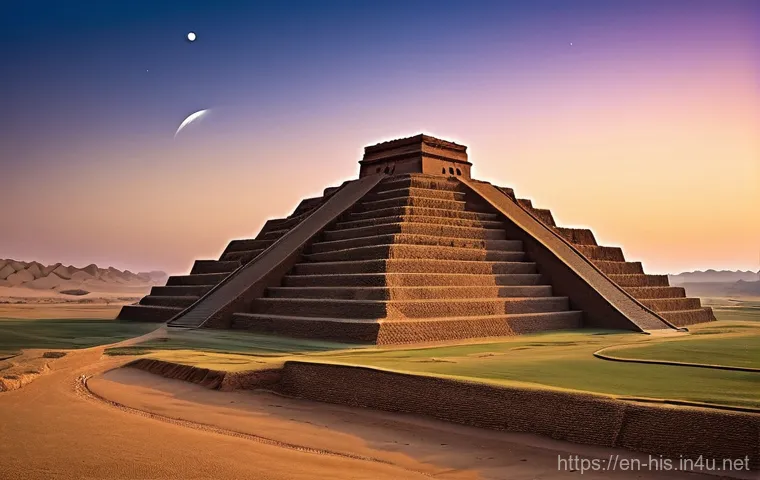
If there’s one image that truly captures Mesopotamian architecture, it has to be the ziggurat. These massive, stepped pyramid-like structures were not tombs like the Egyptian pyramids; they were religious sanctuaries, temples dedicated to their deities, literally reaching for the heavens. Built primarily from sun-dried mud bricks, often with an outer layer of baked bricks for durability, these structures were engineered to last. The sheer scale and complexity of building something like the Ziggurat of Ur, with its multiple platforms and a shrine at the very top, speaks volumes about their organizational skills, labor management, and architectural prowess. It wasn’t just a building; it was a symbol of their connection to the divine, a focal point for the entire city, and a testament to their deep spiritual beliefs. I’m always amazed at how these structures, made from humble mud and reeds, could achieve such monumental grandeur.
Foundations of Urban Life: Planning and Innovation
Mesopotamia wasn’t just about grand temples; it was also the birthplace of urban planning. Cities like Uruk and Ur were laid out with remarkable foresight, featuring wide streets, public buildings, and distinct residential zones. City walls, often massive and multi-layered, provided crucial protection and defined the urban boundaries. What I find particularly interesting is their innovative use of arches and vaults in construction. This allowed for larger and more stable structures, a principle that continues to be fundamental in architecture today. They even incorporated central courtyards in their houses, a brilliant design for natural cooling in their hot climate, showing a practical understanding of sustainable living. The way they integrated essential services like irrigation canals within the urban fabric truly showcases their holistic approach to creating thriving, organized societies. It’s a reminder that good design isn’t a modern invention; it’s a timeless pursuit.
| Invention | Approximate Era of Development | Key Impact |
|---|---|---|
| Cuneiform Writing | ~3500 BCE (Sumerian) | Record-keeping, literature, laws, knowledge transfer, societal organization. |
| The Wheel (Potter’s) | ~3500 BCE | Mass production of ceramics, increased efficiency in craftsmanship. |
| The Wheel (Vehicular) | ~3000 BCE | Revolutionized transportation, trade, and military logistics. |
| Irrigation Systems | ~4000-3000 BCE onwards | Transformed arid land into fertile fields, enabled agricultural surplus, supported urban growth. |
| Sexagesimal System (Base-60 Math) | Prior to 2000 BCE (Sumerian/Babylonian) | Basis for modern timekeeping (60 mins/hour, 60 secs/min) and angular measurement (360 degrees). |
| Lunisolar Calendar | Early Dynastic Period (~2900 BCE) | Organized agricultural cycles, religious festivals, and social life. |
| Ziggurats & Arches | Uruk Period onwards | Monumental architecture, religious centers, advanced structural engineering, urban planning. |
Sails on the Horizon: Conquering the Waterways
Mesopotamia, being literally “between the rivers,” had a natural connection to water. But it wasn’t enough to just float along. The ingenuity of these ancient peoples truly shone when they figured out how to harness the wind to travel further and faster. I’m talking about the invention of the sail! Before sails, water travel was mostly limited to rafts or simple wooden vessels powered by paddles, relying heavily on currents or human effort. But with the sail, a whole new world of possibilities opened up. It’s absolutely incredible to think about how this one invention transformed trade, exploration, and even fishing practices across the ancient world. When I see sailboats gliding gracefully across a lake today, I’m reminded of those Mesopotamian pioneers who first hoisted a piece of cloth to the wind, pushing the boundaries of what was possible.
Harnessing the Wind: A Game-Changer for Trade
The invention of the sail, primarily made from linen, was a monumental leap forward for transportation and, crucially, for trade. Imagine trying to move heavy cargo like grain, timber, or precious metals up and down the mighty Tigris and Euphrates rivers without the power of the wind. It would have been an arduous, slow, and labor-intensive task. Sailboats allowed for the efficient movement of goods over longer distances, significantly boosting Mesopotamia’s economy and facilitating interactions with distant lands. This wasn’t just about local commerce; it opened up new opportunities for extensive trade networks, allowing diverse cultures to exchange not just goods, but also ideas and technologies. I personally believe that the ability to easily move resources and foster connections through trade was a major catalyst for the rapid development seen in Mesopotamian cities.
Expanding Horizons: Beyond the Riverbanks
While the initial use of sails was likely focused on river navigation, this technology naturally encouraged more ambitious maritime endeavors. Larger, more stable ships could venture into deeper, more treacherous waters, pushing the boundaries of exploration. This expansion of reach wasn’t just for trade; it also allowed for more sophisticated fishing practices, enabling communities to access richer fishing grounds and diversify their food sources. Although early Mesopotamian sails had limitations, often unable to change angle easily and thus relying on favorable winds, their very existence sparked a revolution in seafaring. It’s a prime example of how a seemingly simple invention can have ripple effects, fundamentally changing how a society interacts with its environment and with the wider world. The courage and ingenuity it must have taken to experiment with wind power on water, truly inspires me.
Beyond Basics: Industrial Innovations and Material Mastery
You know, it’s easy to get caught up in the big, splashy inventions like writing and the wheel, but the Mesopotamians were also masters of countless other practical innovations that profoundly shaped their daily lives and societal capabilities. From the very bricks that built their towering cities to the metals that forged their tools and weapons, they constantly pushed the boundaries of material science and industrial production. It’s truly fascinating to see how they leveraged local resources and applied systematic thinking to create solutions that, even today, underpin many of our modern processes. I’ve always been a fan of efficiency, and their approach to making things better, faster, and stronger really resonates with me.
The Art of Building: Mass-Produced Bricks and Early Metallurgy
Think about the sheer scale of Mesopotamian cities and their monumental structures like ziggurats. How did they build them? With bricks, and lots of them! What’s truly impressive is that they were the first people to mass-produce bricks. Before this, each brick was hand-formed, a incredibly labor-intensive process. They developed brick molds, allowing a single worker to churn out ten or more bricks at a time. This wasn’t just a clever trick; it was an industrial innovation that made large-scale construction feasible, enabling the rapid growth of their urban centers. Coupled with this was their pioneering work in metallurgy. Mesopotamia was one of the first Bronze Age societies, developing from copper and gold into bronze, and later even iron. This mastery of metals meant stronger tools for agriculture, more durable weapons for defense, and even elaborate decorative elements for palaces. It’s hard to overstate the foundational impact of these material advancements on their civilization.
Crafting Comfort and Convenience: Textiles and Glass
But it wasn’t just about grand structures and weaponry. The Mesopotamians also innovated in ways that brought comfort and convenience to everyday life. They were pioneers in textile weaving, developing weaving looms that made the production of fabrics and garments quicker and easier. Imagine the labor saved and the quality improved compared to purely hand-spun and woven textiles! This contributed to their economy and provided warmth and clothing for their populations. And get this – they were also among the first to develop glassmaking! While we might picture intricate stained glass, even rudimentary glass production for beads, seals, or decorative objects was a testament to their advanced understanding of materials and heat. These innovations, often overlooked, collectively demonstrate a society continually striving for improvement, making life more efficient and a little bit more comfortable for everyone.
The Blueprint for Urban Living: Pioneering City Design
Whenever I find myself navigating a bustling city today, with its structured streets and distinct neighborhoods, I can’t help but marvel at how much of that fundamental concept was truly pioneered thousands of years ago in Mesopotamia. They weren’t just building collections of houses; they were consciously designing *cities* with purpose and order. This foresight, this deliberate approach to urban planning, is a testament to their incredibly organized and innovative society. It’s not just about erecting buildings, but about creating a functional, thriving ecosystem for thousands of people. For me, it shows a deep understanding of community and the needs of collective living, principles that are still so vital in our own urban centers.
Order from Chaos: Structured Layouts and Infrastructure
Mesopotamian cities were far from chaotic clusters. Archaeological surveys reveal meticulously planned layouts, particularly during the Uruk and Early Dynastic periods. We’re talking about wide, straight streets, carefully delineated residential zones, and public areas. This structured approach was crucial for managing a growing population and facilitating efficient movement within the city. Think about the logistics of daily life: getting water, trading goods, and simply moving around. Their urban design incorporated essential infrastructure, with canals playing a vital role not just for agriculture but also for transportation and even waste management. This level of foresight in integrating necessary services directly into the city’s blueprint is truly remarkable and speaks to an advanced understanding of societal needs. It’s a reminder that even the oldest cities were built with a forward-thinking mindset.
The City as a Statement: Walls and Public Spaces
Beyond functionality, Mesopotamian city planning also made powerful statements. Monumental city walls, often constructed from robust mud bricks, not only provided defense but also clearly demarcated the city’s boundaries, creating a sense of collective identity and security. Within these walls, public buildings like temples and palaces underscored the political and religious hierarchy, serving as focal points for civic life. The presence of communal spaces, markets, and even taverns within these organized blocks suggests a vibrant social fabric. It wasn’t just about survival; it was about creating a rich, interactive environment where people could live, work, worship, and socialize. This integrated approach, where architecture, infrastructure, and social organization converged, showcases how the Mesopotamians truly laid the groundwork for what we understand as urban civilization, making their cities not just places to live, but centers of culture and innovation.
Wrapping Things Up
Wow, what a journey through time! It’s truly astounding to reflect on how a civilization so ancient, nestled between two mighty rivers, laid such fundamental groundwork for almost everything we take for granted today. From the words you’re reading right now, etched in a digital form descended from cuneiform, to the very notion of structured time and the efficient movement of goods, Mesopotamia was a powerhouse of innovation. I find myself constantly amazed by their sheer brilliance and how their ingenious solutions to everyday problems millennia ago continue to resonate in our modern world. It really makes you appreciate that incredible human capacity for creativity and problem-solving, doesn’t it?
Good to Know
Want to keep exploring the wonders of ancient history and dive deeper into the legacies of brilliant civilizations? Here are a few tips to make your journey even more engaging and insightful:
1. Think about the “Why”: Instead of just memorizing dates and names, try to understand *why* these inventions were needed. What problems were the Mesopotamians trying to solve? This approach makes history much more relatable and memorable.
2. Connect to Today: Look for the modern-day echoes of ancient inventions. Our 60-second minutes and 360-degree circles? Directly from Mesopotamia! Recognizing these connections helps bridge the gap between ancient times and your daily life, showing just how enduring these legacies are.
3. Visual Learning is Key: Ancient civilizations often left behind incredible artifacts and architectural marvels. Seek out documentaries, virtual museum tours, and historical reconstructions. Seeing these wonders can bring history to life in a way textbooks sometimes can’t.
4. Explore Primary Sources (in translation!): Don’t be intimidated! Many ancient texts, like the Epic of Gilgamesh or Hammurabi’s Code, are available in accessible translations. Reading them offers a direct window into the minds and cultures of these ancient peoples.
5. Look Beyond the “Big Names”: While Egypt and Rome often grab headlines, remember that civilizations like Mesopotamia, the Indus Valley, and others were equally groundbreaking. Diversifying your historical exploration opens up a whole new world of fascinating discoveries!
Key Takeaways
It’s truly mind-blowing to consider how many fundamental aspects of our modern world trace their origins back to the fertile crescent of Mesopotamia. As we’ve explored, this region wasn’t just “the cradle of civilization”; it was the actual workshop where humanity first started hammering out the tools and concepts that define organized society. From the invention of writing, which allowed for the systematic recording of laws, literature, and history, to the revolutionary wheel that transformed transportation and commerce, their impact is undeniable.
I personally believe that understanding these ancient innovations isn’t just about historical curiosity; it’s about appreciating the incredible journey of human ingenuity. The Mesopotamians didn’t have advanced technology, yet they tackled complex challenges like flood control with sophisticated irrigation systems, developed intricate mathematical and astronomical systems, and pioneered urban planning that shaped future cities.
Their spirit of innovation, their ability to adapt to their environment, and their relentless pursuit of progress continue to inspire me. Every time you check the time, write an email, or even see a wheel spin, you’re experiencing a direct lineage from those brilliant minds of ancient Mesopotamia. They truly laid the foundation for us to build upon, proving that even the simplest ideas can have the most profound and lasting effects across millennia. It’s a powerful reminder that every great advancement began with a single, often audacious, idea.
Frequently Asked Questions (FAQ) 📖
Q: What’s one of the most mind-blowing Mesopotamian innovations that still shapes our daily lives today, even if we don’t realize it?
A: Oh, this is such a fantastic question, and honestly, there are so many contenders! But if I had to pick just one that truly blew my socks off when I first delved into it, it would have to be writing.
Think about it: every text message we send, every email, every book we read – it all stems from that incredible leap in Mesopotamia. Before cuneiform, how did people record complex laws, trade deals, or even their amazing stories?
They couldn’t! It was all word-of-mouth, which is beautiful in its own way, but so fragile. Imagine trying to run a bustling city-state like Ur or Babylon without a way to keep consistent records.
It would be chaos! I mean, I can barely keep my shopping list straight without writing it down, let alone manage an entire civilization’s grain supply.
Learning about how they meticulously carved those wedge-shaped marks onto clay tablets to represent sounds and ideas, and how that system evolved, really hammered home for me just how foundational it was.
It wasn’t just about communicating; it was about building knowledge, preserving history, and creating the very bedrock of organized society. Every time I type something out, I get a little thrill thinking about those ancient scribes and how they literally wrote the future.
Q: You mentioned them “taming rivers.” How did they actually manage that, and why was it such a huge deal for their civilization?
A: That phrase, “taming rivers,” really paints a picture, doesn’t it? It sounds almost mythical, but what they did was pure genius, and it was absolutely critical for their survival and prosperity.
Mesopotamia, nestled between the Tigris and Euphrates, faced a pretty big challenge: unpredictable flooding. Too much water, and your crops are gone. Too little, and everything wilts.
They couldn’t just rely on nature’s whims. So, what did they do? They became master engineers of their time!
They developed sophisticated irrigation systems – canals, dikes, and reservoirs – to control the flow of water. They built networks of channels to divert water from the rivers to their fields, ensuring a steady supply even during dry spells.
And conversely, they built dikes to protect their cities and farms from destructive floods. I remember reading about it and thinking, “Wow, this wasn’t just about digging ditches; this was about understanding complex hydrology and organizing thousands of people to build and maintain these massive public works!” This wasn’t just about farming; it transformed their entire society.
A reliable food supply meant they could support larger populations, people could specialize in crafts, governance, and scholarship, leading to the rise of those intricate city-states we marvel at.
It truly was the engine behind their incredible growth, allowing them to build a civilization that endured for millennia.
Q: When we talk about “measuring the very fabric of time itself,” how advanced were Mesopotamians in astronomy and mathematics, and how does that echo in our modern world?
A: Oh, this is where it gets incredibly cool and, honestly, a little mind-bending! When I think about their understanding of time and the cosmos, it just highlights how brilliant they were.
The Mesopotamians were incredibly keen observers of the night sky, and their astronomical observations and mathematical systems were truly groundbreaking.
They developed a sexagesimal (base-60) number system, which might sound obscure, but trust me, it’s everywhere in our lives! Think about it: a minute has 60 seconds, an hour has 60 minutes, and a circle has 360 degrees.
That’s directly from them! It’s like they designed the very clockwork of our universe for us. They meticulously tracked the movements of celestial bodies, not just for religious or astrological purposes, but with a deep, scientific understanding.
They could predict eclipses and charted constellations, laying the groundwork for much of what we now call astronomy. It wasn’t just theoretical either; this knowledge was practical.
It helped them create calendars for agriculture and religious festivals, bringing order to their lives. Learning that our modern way of dividing time and angles is a direct inheritance from these ancient people – who were literally tracking stars thousands of years ago – gives me chills.
It’s like finding a secret, ancient code embedded in our everyday existence. It makes me wonder what other subtle influences they’ve left us with!