Hey there, history explorers! You know those legendary clashes that echo through time, shaping nations and leaving an indelible mark on the world? Well, get ready to dive deep into one of East Asia’s most epic, and frankly, absolutely mind-blowing, conflicts: the Goguryeo-Sui Wars.
We’re talking about a monumental struggle where two titans locked horns, involving armies so vast they redefined the concept of warfare. It’s a tale packed with incredible strategy, unimaginable resilience, and fascinating twists that still hold valuable lessons for us today.
Forget what you think you know about ancient battles; this is a true masterclass in ambition and survival. Let’s uncover the full, gripping story!
The Seeds of Conflict: Imperial Ambition Meets Fierce Independence

Imperial Ambition Meets Fierce Independence
You know, it’s truly fascinating how often colossal conflicts spark from a simple clash of wills, isn’t it? The late 6th century in East Asia was ripe with tension after the Sui Dynasty had, quite impressively, reunited China after nearly 300 years of division.
Naturally, they felt like the undisputed overlords of the region, expecting everyone around them to just fall in line and acknowledge their supremacy.
But here’s the kicker: Goguryeo, a vibrant and powerful kingdom on the Korean Peninsula, simply wasn’t having it. They had their own strong sense of identity, a proud history, and a self-perception as an independent center of civilization.
Imagine the audacity from Sui’s perspective! Their emperors, initially Wen and later Yang, were absolutely not pleased with Goguryeo’s refusal to play along.
This wasn’t just about territory; it was a deep-seated philosophical disagreement over who held the true mandate of heaven and who deserved deference in the East Asian world.
Goguryeo actively pushed back, even engaging in small-scale raids along Sui’s northern border, which, let me tell you, only poured fuel on the imperial fire.
It was clear as day that something monumental was brewing, a collision of two unyielding forces.
The Costly Preemptive Strike
It’s like when you see two strong personalities squaring off, each waiting for the other to blink first. In 597 CE, King Yeongyang of Goguryeo, sensing the inevitable storm, decided to take matters into his own hands and launched a preemptive strike.
He joined forces with the Malgal people, initiating an invasion into Chinese outposts along the border in what is now Hebei province. This was a bold move, a definite “poke the bear” moment, and it completely infuriated Emperor Wen of Sui.
His response was swift and decisive, ordering a massive invasion of Goguryeo in 598 CE. This initial Sui force, numbering around 300,000, was a combined land and naval operation, a formidable sight to behold.
However, as I’ve come to appreciate about history, it rarely goes according to plan. This first campaign ran straight into an early rainy season, turning the land into a muddy, impassable mess.
Provisions were hampered, disease spread, and constant harassment from Goguryeo forces chipped away at their morale and numbers. The naval fleet, too, faced treacherous rough seas and sustained heavy losses from Goguryeo detachments whenever they tried to anchor.
Ultimately, this grand first invasion ended in a catastrophic failure for the Sui, with staggering losses of perhaps 80-90% of their land army, forcing them to retreat in utter disarray.
It was a harsh lesson, showcasing that sheer size doesn’t guarantee victory against a resilient and cunning opponent.
Unprecedented Mobilization: The Sui War Machine
Engineering a Grand Invasion
Have you ever seen someone so utterly determined to get their way that they’ll throw everything they have at a problem, no matter the cost? That’s exactly what Emperor Yang of Sui did after taking the throne in 604 CE.
He was absolutely obsessed with subjugating Goguryeo, viewing their independence as a direct affront to his imperial authority. He embarked on an astonishing feat of engineering, completing the Grand Canal, a colossal project linking northern and southern China.
This wasn’t just for trade, folks; it was a strategic masterpiece designed to be the logistical backbone for his immense military campaigns. Imagine the sheer scale!
For the second invasion in 612 CE, the numbers are almost unbelievable. Historical texts, like the Book of Sui, claim Emperor Yang mobilized an army of 1,133,800 combat troops, with an additional 2 million support personnel.
Picture this: a continuous line of soldiers stretching for nearly 200 miles, taking 40 days just for the entire army to depart from its assembly point near present-day Beijing.
It’s mind-boggling to think about the human and material resources poured into this endeavor. To me, it highlights a level of ambition that truly pushed the boundaries of what was thought possible in ancient warfare.
The Logistics Nightmare
But here’s the thing about grand ambitions: they often hit a wall when confronted with the gritty realities of logistics. While the Sui Dynasty could mobilize millions, feeding and supplying such a massive force over vast distances, especially into hostile territory, proved to be their Achilles’ heel.
I mean, think about it—even getting a small group of friends organized for a camping trip is tough enough! Emperor Yang tried to “solve” the supply problem by having each soldier carry their own provisions, which sounds good on paper, right?
Wrong. The burden was so immense that many soldiers simply discarded their food along the way. By the time these weary troops reached the Yalu River, their food shortages were acute.
The sheer length of the supply lines also meant they were constantly vulnerable to Goguryeo ambushes, turning what should have been a steady flow of resources into a trickle of dwindling supplies.
This logistical nightmare wasn’t just an inconvenience; it was a fundamental flaw that crippled the vast Sui army from within, a testament to how even the most powerful war machine can grind to a halt without a solid foundation of support.
It really makes you appreciate the unsung heroes of history—the quartermasters and logistics teams!
Goguryeo’s Unyielding Shield: Fortresses and Resilience
The Impregnable Border Defenses
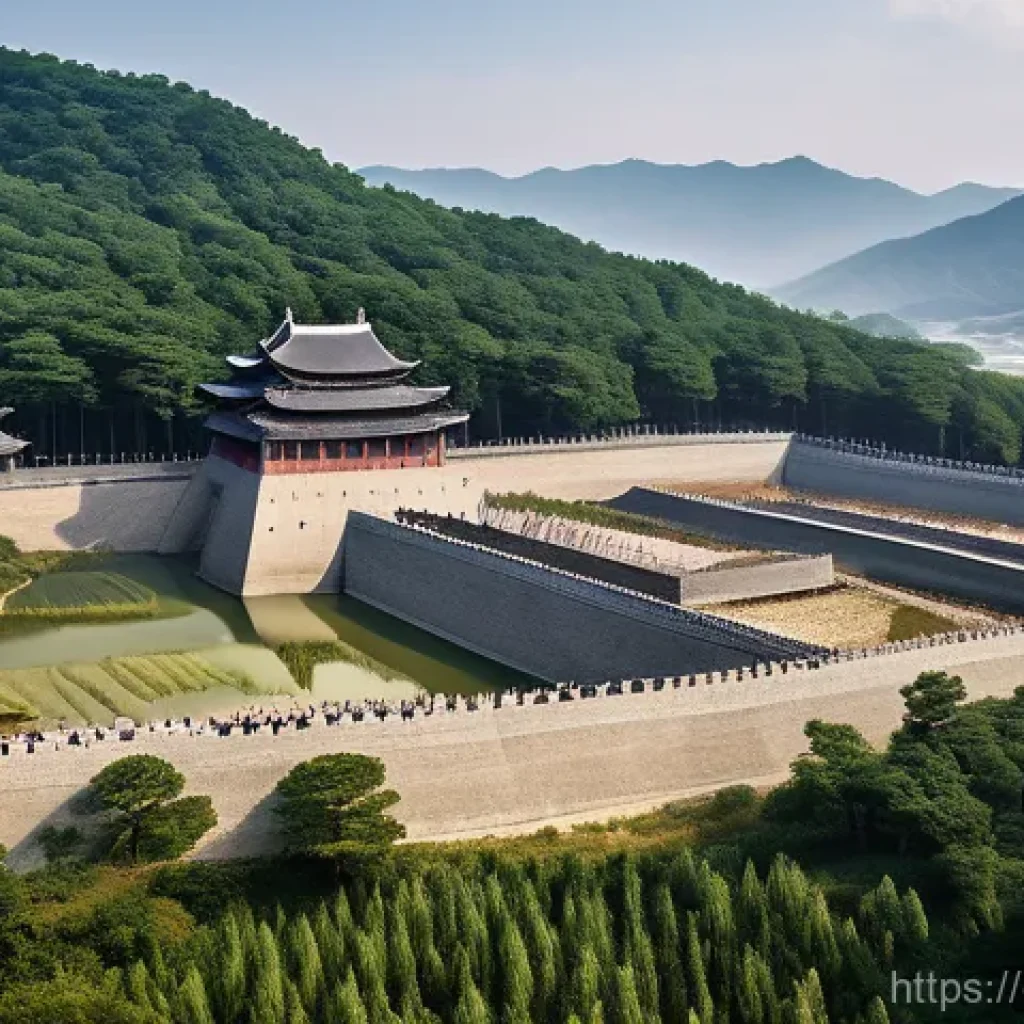
Now, let’s talk about Goguryeo. They weren’t just sitting around waiting for the inevitable; they were smart, strategic, and incredibly resilient. Their defense wasn’t about meeting the Sui head-on in open battle, which would have been suicide given the numerical disparity. Instead, they leveraged their mountainous terrain like a pro. Imagine a network of interconnected mountain fortresses, built from cyclopean granite blocks, strategically positioned along their border. These weren’t just walls; they were formidable citadels, incredibly difficult to capture even with a colossal army. I’ve often thought about how much sheer ingenuity and back-breaking labor must have gone into building these. These fortresses served as an unyielding shield, designed to bog down the Sui advance, draining their resources and morale with prolonged sieges. The Sui army frequently found itself stuck outside these fortified strongholds, unable to break through swiftly. This strategy forced the invaders to deal with each fortress individually, preventing a rapid advance into Goguryeo’s heartland and effectively slowing down the entire invasion, buying Goguryeo precious time and wearing down the enemy. It’s a classic example of using your environment to your absolute advantage.
A Dance of Deception and Retreat
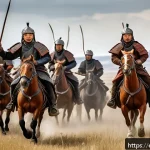
Beyond static defenses, Goguryeo had a secret weapon: General Eulji Mundeok, a tactical genius who, honestly, I’d love to have on my team in any strategy game. He knew they couldn’t win by direct confrontation, so he employed a brilliant strategy of deception and feigned retreats. It was like a dangerous dance, luring the Sui forces deeper and deeper into Goguryeo territory. For months, his forces would engage the Sui army, feigning defeat seven times a day, each time retreating further, giving the impression of an easy victory for the Sui. This wasn’t a sign of weakness; it was a calculated maneuver to stretch the Sui’s already strained supply lines to their absolute breaking point and to exhaust their immense army. I mean, can you imagine marching for months, thinking you’re constantly winning, only to find yourself deeper in enemy territory with dwindling food and weary soldiers? It’s a psychological masterpiece! This tactic, combined with constant harassment and ambushes by smaller, more mobile Goguryeo units, kept the Sui army off-balance and constantly suffering casualties, slowly but surely turning their overwhelming numerical advantage into a logistical nightmare. Eulji Mundeok understood that patience and precision could outmaneuver brute force any day.
The Turning Tide: General Eulji Mundeok’s Masterstroke
The Fateful March to Pyongyang
So, with the main Sui army bogged down at the border fortresses, Emperor Yang, growing increasingly frustrated, decided to gamble big. He detached a massive contingent of over 300,000 elite troops, under the command of generals Yu Zhongwen and Yuwen Shu, with a direct order: bypass the border defenses and march straight for Pyongyang, Goguryeo’s capital. This was supposed to be the decisive blow, a lightning strike to end the war. These troops were given a supply of food, but as we discussed, their supply lines were already a mess. Eulji Mundeok, with his incredible strategic foresight, allowed this detached force to advance, retreating skillfully and making them believe victory was within their grasp. He even sent a wonderfully cunning poem to the Sui commanders, flattering their military brilliance while subtly hinting that they should know when to withdraw. It was a psychological masterpiece, playing on their exhaustion and ambition. The Sui forces, despite their mounting weariness and acute shortage of provisions, pushed on, reaching within about 10-20 miles of Pyongyang. They were so close, yet so perilously far. They were deep in enemy territory, far from reinforcements, and completely exposed – a perfect trap.
The Devastation at Salsu River

And then, the moment arrived—the devastating Battle of Salsu River in 612 CE. This is where Eulji Mundeok truly etched his name into the annals of military history. As the over 300,000 Sui troops, exhausted and low on rations, began their retreat after realizing the impossibility of taking Pyongyang, they reached the Salsu River (modern-day Chongchon River). What they didn’t know was that Eulji Mundeok had a trick up his sleeve, or rather, a dam upstream. He had strategically dammed the river, lowering its water level. As the Sui army was halfway across, he gave the order to release the dam. A torrent of raging water surged down, drowning thousands of Sui soldiers and creating utter chaos. With the enemy divided and disoriented, Eulji Mundeok’s forces launched a brutal, coordinated attack, slaughtering the remaining Sui troops. It was an annihilation. Historical texts record that out of the initial 305,000 men who marched towards Pyongyang, only a mere 2,700 to 2,800 returned alive. This battle was not just a victory; it was a catastrophic defeat for the Sui, a complete collapse of their grand invasion.
| Campaign Year | Sui Force (Approx.) | Goguryeo Strategy Highlights | Sui Casualties (Approx.) | Key Outcome |
|---|---|---|---|---|
| 598 CE | 300,000+ | Preemptive strike, weather advantage, harassment | 80-90% of land army | Sui retreat, initial disaster |
| 612 CE | 1,133,800 combat troops (total invasion force) | Fortress defense, feigned retreat, Salsu River trap | ~302,300 (specifically, 302,300 out of 305,000 at Salsu) | Decisive Goguryeo victory, Battle of Salsu |
| 613 CE | Massive mobilization (details vary) | Continued resistance, exploiting internal Sui issues | Significant, but less specified | Sui withdrawal due to internal rebellion |
| 614 CE | Large force (details vary) | Ambushes, supply line disruption | Significant, but less specified | Sui withdrawal after Goguryeo offered peace |
Lingering Shadows: Subsequent Invasions and Internal Strife
Persistent Pressure and Futile Attempts
You might think that after a devastating loss like the Battle of Salsu, Emperor Yang would have learned his lesson, right? Well, if you’ve ever met someone truly stubborn, you know that sometimes failure just fuels their fire. Emperor Yang was absolutely obsessed with defeating Goguryeo, and despite the catastrophic defeat in 612, he was far from giving up. He launched a third invasion in 613 and a fourth in 614. These subsequent campaigns, though perhaps not on the same mind-boggling scale as 612, were still massive undertakings, draining what was left of Sui’s manpower and treasury. Goguryeo, though also exhausted, continued its fierce resistance. They stuck to their proven strategies: utilizing their robust fortress networks, launching constant ambushes, and disrupting Sui supply lines. I mean, it must have been incredibly frustrating for the Sui generals, constantly facing a tenacious enemy that refused to fight on their terms and seemed to vanish into the terrain. Each attempt simply piled more strain onto the already crumbling foundations of the Sui Dynasty. It felt like they were pouring water into a bottomless pit, achieving little more than exhausting themselves further.
The Empire’s Unraveling
What happened next is a classic tale of imperial overreach and the internal rot that sets in when a leader pushes their people too far. Emperor Yang’s relentless, costly, and ultimately futile campaigns against Goguryeo bled the Sui Dynasty dry. Millions of lives were lost, and immense resources were squandered on these foreign adventures. The populace, burdened by endless conscription and exorbitant taxes for these wars and other grand projects like the Grand Canal, grew increasingly discontent. This wasn’t just a murmuring; revolts began to erupt across China. Can you imagine being a peasant, forced to abandon your farm to march hundreds of miles, only to face starvation, disease, and a formidable enemy, all for an emperor’s pride? It’s a recipe for disaster. The discontent eventually escalated into widespread rebellions that the Sui regime simply couldn’t contain. Emperor Yang tried to move his capital south, but it was too late. The dynasty had been fatally weakened, and in 618 CE, just 37 years after its founding, the Sui Dynasty collapsed, overthrown by the Tang Dynasty. It’s a powerful reminder that even the mightiest empires can crumble from within when their leaders ignore the needs and resilience of both their own people and their determined adversaries.
A Legacy Etched in History: Impact on East Asia
The Price of Victory and Defeat
Looking back at the Goguryeo-Sui Wars, it’s clear that both sides paid an unimaginable price. For the Sui Dynasty, it was nothing short of total collapse. Their ambitious, costly, and repeated failures to conquer Goguryeo were a pivotal factor, a huge weight that dragged them down. The loss of lives, the depletion of resources, and the erosion of trust in the imperial government all contributed directly to the dynasty’s swift downfall. It’s wild to think that a series of failed foreign wars could shatter an empire that had just unified China! On the other hand, Goguryeo emerged victorious, having successfully defended its independence against arguably the most powerful force in East Asia at the time. Their strategic genius, particularly Eulji Mundeok’s brilliant leadership, and the indomitable spirit of their people, saved their kingdom from subjugation. However, let’s not romanticize it too much. These wars were incredibly taxing, even for Goguryeo. They too suffered immense losses and were undeniably weakened by the prolonged conflict, laying the groundwork for future challenges. It’s a stark reminder that even a victory can come with a profound cost, leaving scars that linger for generations.
Lessons in Endurance and Strategy
What strikes me most about these wars is the enduring lessons they offer in endurance, strategic brilliance, and the sheer power of an underdog. Goguryeo’s ability to repel such a massive and formidable aggressor cemented its reputation as a dominant regional power and a symbol of fierce independence. It showcased how a smaller, well-prepared, and strategically agile state could outmaneuver a numerically superior foe. Eulji Mundeok, for me, stands as one of history’s true military masterminds, proving that intellect and psychological warfare can be as potent as armies numbering in the millions. The Sui-Goguryeo Wars didn’t just end with a change of dynasty in China; they reshaped the political landscape of East Asia for centuries to come. The Tang Dynasty, which succeeded the Sui, certainly took these lessons to heart, initially adopting a more conciliatory approach towards Goguryeo. The legacy of these conflicts is still palpable, reminding us that true strength isn’t always about the biggest army, but often about superior strategy, unwavering resolve, and the ingenious use of terrain and tactics. It’s a story that continues to inspire, teaching us that even against overwhelming odds, a well-planned and determined defense can indeed change the course of history.
Wrapping Things Up
Well, what a journey through history, right? It’s truly incredible to delve into these pivotal moments that shaped entire civilizations. The story of the Goguryeo-Sui Wars isn’t just about battles and empires; it’s a powerful testament to the unwavering spirit of independence and the catastrophic consequences of unchecked ambition. It really makes you pause and consider how often the lessons of the past echo through our present. For me, it reinforces the idea that true strength lies not just in overwhelming force, but in resilience, strategic thinking, and the collective will of a people to protect what they cherish most. History, after all, is the ultimate teacher, and this particular chapter offers a masterclass in determination against seemingly impossible odds.
Useful Information to Know
-
Strategic Geography is Key: Goguryeo’s brilliant use of its mountainous terrain and well-fortified defenses wasn’t just a coincidence. Understanding and leveraging your environment can turn a numerical disadvantage into a strategic asset. Think about how modern businesses use niche markets or specialized knowledge to compete with larger corporations. It’s the same principle!
-
Logistics Can Break Empires: The Sui Dynasty’s downfall serves as a stark reminder that even the grandest plans crumble without a robust logistical backbone. Whether you’re planning a massive military campaign or a cross-country move, never underestimate the power of efficient supply chains and clear planning. It’s often the unseen details that make or break a venture.
-
The Underdog Can Win: Eulji Mundeok’s incredible tactics, particularly at the Salsu River, illustrate that wit and cunning can absolutely triumph over brute force. This isn’t just a historical anecdote; it’s a timeless lesson for anyone facing overwhelming odds, whether in sports, business, or personal challenges. Don’t be afraid to think outside the box!
-
Imperial Overreach is a Dangerous Game: Emperor Yang’s relentless pursuit of Goguryeo, despite repeated failures and immense costs, ultimately led to the collapse of his own dynasty. This is a powerful cautionary tale about knowing when to cut your losses and prioritizing the well-being of your own people and resources. Sound familiar to any modern political or economic situations? History truly does repeat itself!
-
Endurance Shapes Identity: The successful defense against the Sui invasions solidified Goguryeo’s identity as a strong, independent power in East Asia for centuries. Nations, like individuals, forge their character and legacy through adversity. Understanding these historical struggles helps us appreciate the deep cultural roots and resilience of many societies today, offering a richer perspective on global dynamics.
Key Takeaways
To sum it all up, the Goguryeo-Sui Wars were a monumental series of conflicts that dramatically altered the course of East Asian history. We saw how the newly unified Sui Dynasty, driven by imperial ambition, aimed to assert its dominance, only to be met by Goguryeo’s fierce independence and brilliant defensive strategies. The sheer scale of Sui’s mobilization efforts, particularly Emperor Yang’s colossal second invasion, was unprecedented, but their logistical nightmare proved to be their undoing. Goguryeo’s unwavering shield of mountain fortresses, combined with the tactical genius of General Eulji Mundeok – especially his decisive victory at the Salsu River – inflicted catastrophic defeats upon the Sui. These repeated failures weren’t just battlefield losses; they critically destabilized the Sui Dynasty, leading directly to its internal collapse and the rise of the Tang. Ultimately, this historical chapter is a powerful narrative of resilience, strategic mastery, and the profound impact that foreign policy and leadership decisions can have on the fate of empires, reminding us that even the mightiest can fall when they underestimate a determined adversary.
Frequently Asked Questions (FAQ) 📖
Q: What actually kicked off the massive Goguryeo-Sui Wars? Was it just one big thing or a mix of factors?
A: You know, when you really dive into history, you start seeing patterns, right? For the Goguryeo-Sui Wars, it wasn’t just one single spark that set off this powder keg; it was a potent cocktail of ambition, perceived threats, and sheer strategic importance.
The Sui Dynasty, fresh off its incredible achievement of unifying China after centuries of division, was absolutely brimming with confidence. Their emperors, especially Emperor Yang, had this grand vision of a truly unified ‘All Under Heaven’ – and Goguryeo, sitting right there, independent and incredibly powerful, was seen as a pesky thorn in their side, even a potential rival.
I mean, imagine building this magnificent, unified empire, only to have a strong, independent kingdom on your border that refuses to bow down. It’s a challenge to authority!
On Goguryeo’s side, they were no shrinking violets either! They had their own strong expansionist tendencies, controlling vital trade routes and acting as a major regional power.
So, you had Sui wanting absolute, unchallenged control, and Goguryeo absolutely refusing to give an inch of their hard-won sovereignty. It was almost inevitable, wasn’t it?
A classic case of an irresistible force meeting an immovable object, and the consequences were, as we know, absolutely epic.
Q: How did Goguryeo, facing such colossal Sui armies, manage to be so incredibly resilient and hold their ground?
A: Oh, this is where it gets truly fascinating and, frankly, incredibly inspiring! When you look at the sheer numbers – Sui throwing armies of a million or more at Goguryeo – you’d think it was a foregone conclusion.
But Goguryeo? They had grit, ingenuity, and a homeland they fought tooth and nail for. What I’ve seen in my research is that it wasn’t just one magic bullet that saved them.
First, their fortifications were legendary. Think about it: a dense network of formidable mountain fortresses, strategically placed to slow down, wear out, and entrap any invading force.
Then, there was their ‘scorched earth’ policy – denying the massive Sui armies any local resources, forcing them to lug all their supplies over vast distances.
That’s a logistical nightmare even with modern tech, let alone back then! And seriously, who can forget General Eulji Mundeok? This man was a strategic genius!
His tactics, especially at the Battle of Salsu River, are still studied in military academies today. He expertly lured the Sui forces deep into their territory, cut off their supply lines, and then, bam!
— unleashed a devastating attack during their retreat. It’s a testament to their military prowess, their deep understanding of their terrain, and a unified spirit that truly defines resilience.
They simply refused to break, and that refusal shaped history!
Q: What were the lasting consequences of these wars, not just for Goguryeo and Sui, but for the wider East
A: sian region? A3: The ripple effects of these wars are truly mind-boggling, shaping East Asia for centuries, and this is where it gets really juicy for history buffs like us!
For the Sui Dynasty, their massive, incredibly costly, and ultimately disastrous campaigns against Goguryeo were a huge factor in their downfall. Imagine pouring all that wealth, manpower, and political capital into a war you keep losing – it just drains an empire dry!
The popular discontent and continuous military failures directly led to widespread rebellions and, eventually, the swift collapse of the Sui Dynasty, paving the way for the mighty Tang Dynasty.
It’s a stark reminder that even the biggest empires can overextend themselves. For Goguryeo, while they emerged victorious and defended their independence, they were also severely depleted.
The constant warfare took a massive toll on their resources and population. This weakened state, unfortunately, made them more vulnerable to later attacks, eventually leading to their conquest by a combined Silla-Tang force.
So, in a way, these wars reshaped the entire geopolitical map. They created new powers, destroyed others, and truly set the stage for the unified Silla period on the Korean peninsula.
It’s a powerful lesson in how even ‘victories’ can have complex, long-term consequences that aren’t always what they seem on the surface.
📚 References
➤ 4. Goguryeo’s Unyielding Shield: Fortresses and Resilience
– 4. Goguryeo’s Unyielding Shield: Fortresses and Resilience